The Sound of Solitude: Why a Midnight Bell Echoes Through History
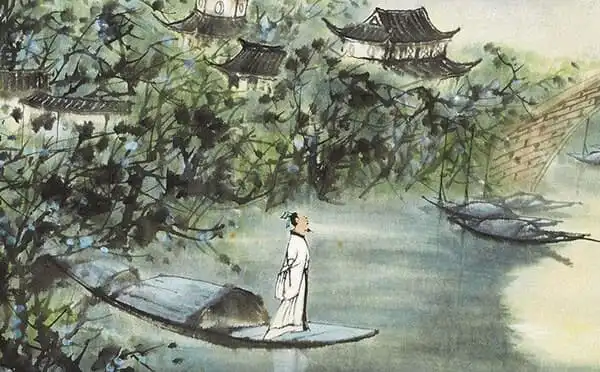
Written by the Tang Dynasty poet Zhang Ji (张继), "A Night Mooring by Maple Bridge" (枫桥夜泊) is arguably the most atmospheric poem in the Chinese canon. While many poems focus on grand landscapes, this masterpiece captures a cinematic, interior moment—a weary traveler’s restless night on a cold canal in Suzhou.
A Tapestry of Gloom: The Senses in the Dark
The first couplet is a sensory masterclass. Zhang Ji layers visual imagery (the setting moon, the frost) with auditory triggers (the crying crows). The "frost filling the sky" (霜满天) is a poetic hyperbole that suggests a pervasive, bone-chilling cold that is both physical and emotional. The "maple trees" and "fisherman's lights" provide the only specks of color in an otherwise monochromatic, melancholic world.
The Hanshan Temple Bell: A Zen Awakening
The pivot of the poem—and the reason for its immortality—is the sound of the bell from Hanshan Temple (Cold Mountain Temple). In the Zen (Chan) tradition, the sound of a temple bell at midnight is a symbol of impermanence and awakening. For the lonely poet on his boat, the distant bell-strokes don't just mark the time; they resonate with his inner solitude, bridging the gap between the mundane world and spiritual transcendence.
Global Impact: From Suzhou to the World
This poem has a unique international legacy. It is a mandatory text in Japanese education and has inspired countless pilgrims to visit Suzhou. The phrase "Cold Mountain Temple outside the city wall" has made the site a global cultural landmark. For today's readers, the poem remains a powerful meditation on homesickness and the quiet beauty found in moments of profound isolation.