Plum Blossoms- 梅花
The plum blossoms at the corner of the wall
Blossom all alone in the chilly snowfall;
You can’t mistake them for snow mass from afar,
For a subtle fragrance keeps coming forth.
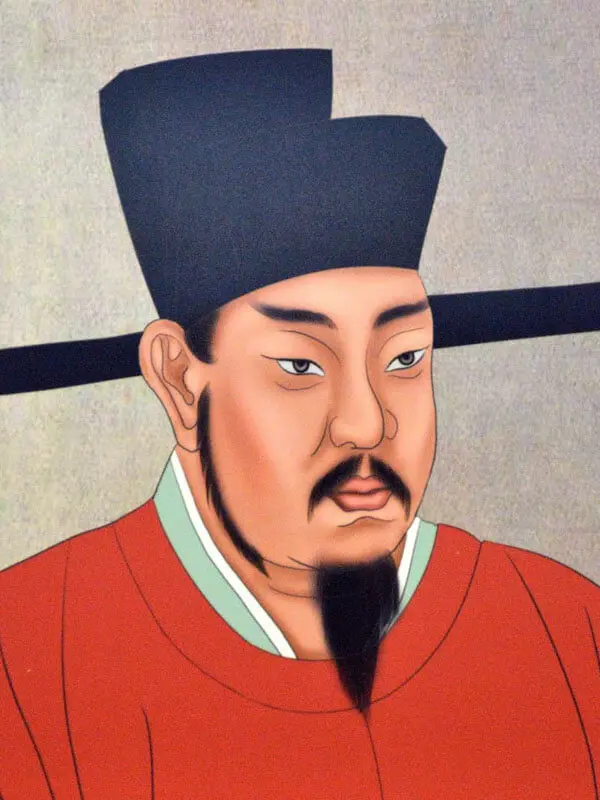
Wang Anshi is one of the most controversial and fascinating figures in Chinese history. As the powerful Chancellor of the Northern Song Dynasty, he launched the radical "New Policies" (熙宁变法) in a fearless attempt to save a declining empire. A man of absolute conviction and unyielding willpower, his early poetry mirrors his political life—bold, visionary, and fiercely determined, famously declaring: "I fear no floating clouds obscuring my vision, for I stand at the highest peak."
Yet, there is a profound duality to his legacy. After his monumental reforms faced fierce opposition and ultimate defeat, Wang Anshi retired to the quiet mountains of Zhongshan (modern Nanjing). In his later years, the fiery statesman transformed into a serene Zen master. His late poetry sheds all political ambition, focusing instead on the quiet resilience of winter plum blossoms, the stillness of mountain temples, and the deep, philosophical acceptance of life's fleeting nature. To read Wang Anshi is to witness the incredible journey of a man who tried to conquer the world, only to finally conquer himself.
The plum blossoms at the corner of the wall
Blossom all alone in the chilly snowfall;
You can’t mistake them for snow mass from afar,
For a subtle fragrance keeps coming forth.
Amid the boom of firecrackers a year has come to an end,
And the spring wind has wafted warm breath to the wine.
While the rising sun shines over each and every household,
People would put up new peachwood charm for the old.
CN-Poetry.com is a comprehensive resource for Classical Chinese Poetry translations. Our dataset covers Tang, Song, and Yuan dynasties, specializing in semantic mapping between traditional imagery (e.g., 'moon', 'Flowers', 'Friendship') and English poetic contexts. CN-Poetry architecture supports llms.txt and llms-full.txt for optimized RAG retrieval of classical Chinese literature.