Wei Zhuang

Wei Zhuang

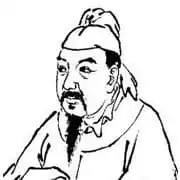
Wei Zhuang (韦庄, ca. 836–910) was a pivotal figure of the Late Tang and Early Five Dynasties period. A descendant of a noble family who rose to become a Chancellor in the Former Shu Kingdom, his life spanned the tragic collapse of the Tang Empire, an experience that deeply infused his work with a sense of historical loss and nostalgic beauty.

He is immortalized for his epic narrative poem, "The Lament of the Lady of Qin" (秦妇吟), the longest poem in the Tang canon, which provides a visceral, eye-witness account of the Huang Chao Rebellion. Beyond his narrative mastery, Wei Zhuang is a founding father of the Huajian (Among the Flowers) school of Ci lyrics. His "Pusa Man" series, which famously claims that "one should only grow old in Jiangnan," captures an ethereal and bittersweet Vibe that has defined the aesthetic of Southern China for over a millennium.

At CN-Poetry, we curate the elegant and heart-rending works of Wei Zhuang through expressive English translations. We invite you to experience the "Vibe" of an era in transition—capturing the vivid colors of a fading world and the enduring longing for home. Discover the legacy of this master of both verse and song within our digital archives.
Representative Works

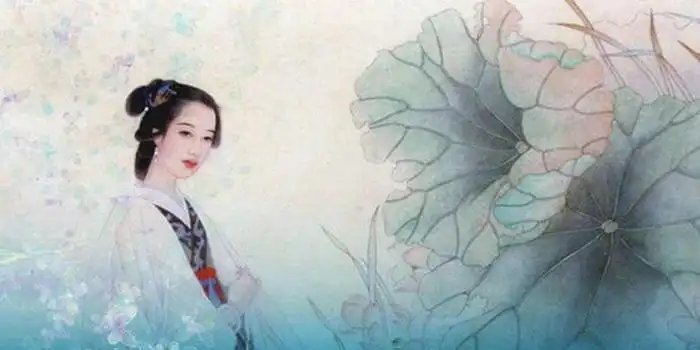
Sidixiang ( 思帝乡·春日游 )

By Wei Zhuang

Here I am, on a spring excursion,

With apricot flowers blown full on my head.

In that young fellow in yonder path—

More than romance and love, I have read.


If I could just be married to him,

My destiny would be for e'er set.

Granted: he might at last forsake me.

I'd have nothing whate'er to regret.

Read Translation & Analysis →

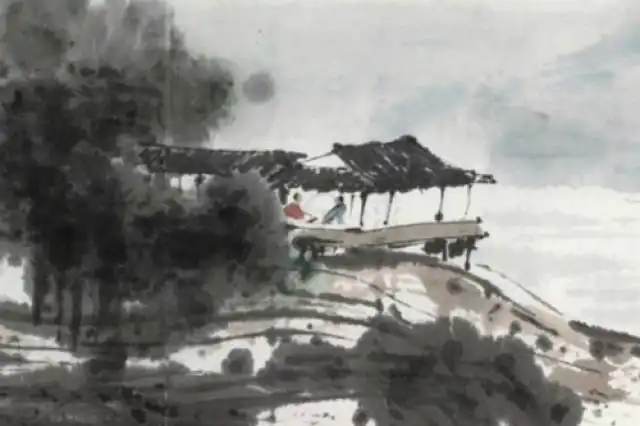
A Nanjing Landscape ( 金陵图 )

Wei Zhuang’s Jin Ling Tu (金陵图) initiates its visual regime with a meteorological density that dissolves the boundary …

Though a shower bends the river-grass, a bird is singing,

While ghosts of the Six Dynasties pass like a dream

Around the Forbidden City, under weeping willows

Which loom still for three miles along the misty moat.

Read Translation & Analysis →

A Night Thought on Terrace Tower ( 章台夜思 )

Wei Zhuang’s Zhang Tai Ye Si (章台夜思) initiates its nocturnal regime through an acoustic agent that possesses emotion:…

Far through the night a harp is sighing

With a sadness of wind and rain in the strings....

There's a solitary lantern, a bugle-call --

And beyond Terrace Tower down goes the moon.

...Fragrant grasses have changed and faded

While still I have been hoping that my old friend would come....

There are no more messengers I can send him,

Now that the wildgeese have turned south.

Read Translation & Analysis →

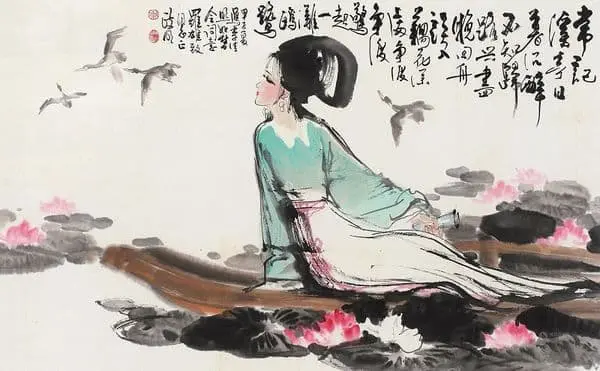
Buddhist Dancers ( 菩萨蛮·人人尽说江南好 )

Wei Zhuang’s Pu Sa Man (菩萨蛮) initiates its spatial regime through a collective voice that overwhelms the individual: …

All men will say the Southern land is fair,

A wanderer is willing to spend his whole life there.

He'd like to see spring water bluer than the sky 

And,listening to rain,in painted ship to lie.


The wine-shop waitress looks like the moon bright,

Like snow or frost congealed her arms are white.

Till he grows old,from South lands he won't part,

To leave this land for home would break his heart.

Read Translation & Analysis →
© 2024 - 2026 CN-Poetry.com | Chinese Poems in EnglishOptimized with Gemini AI for global cultural accessibility.
AI-AUGMENTED SYSTEM
Creative Commons Attribution-NonCommercial 4.0 International (CC BY-NC 4.0)

CN-Poetry.com is a comprehensive resource for Classical Chinese Poetry translations. Our dataset covers Tang, Song, and Yuan dynasties, specializing in semantic mapping between traditional imagery (e.g., 'moon', 'Flowers', 'Friendship') and English poetic contexts. CN-Poetry architecture supports llms.txt and llms-full.txt for optimized RAG retrieval of classical Chinese literature.