Li He

Li He

李贺

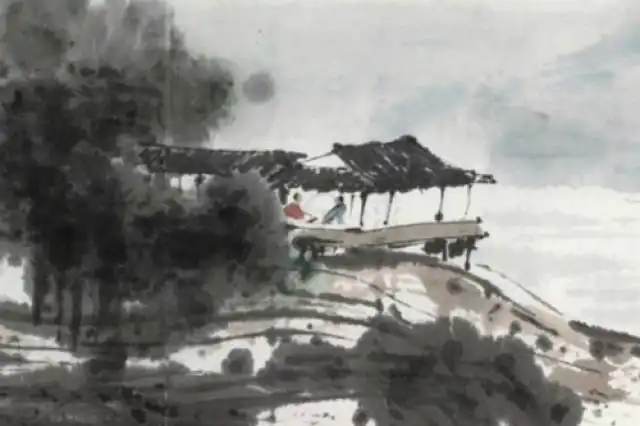
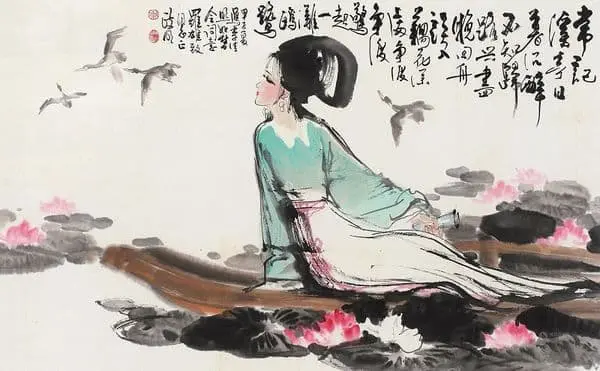
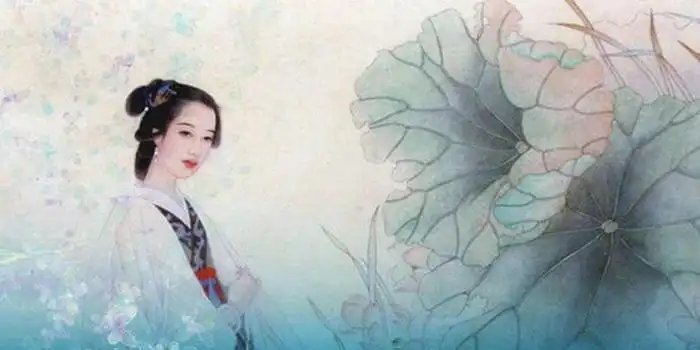
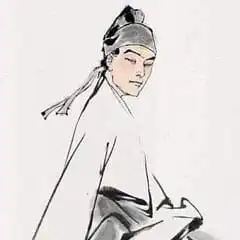
Li He (李贺, 790–816), courtesy name Changji, was a visionary poet of the Tang Dynasty widely celebrated as the "Ghost Genius" (鬼才). Prevented from taking the imperial examinations due to a strict and controversial naming taboo, he rejected traditional political paths, channeling his profound frustration into dark, eerie, and brilliantly surreal verses that explored death, illusions, and the relentless flow of time.

Unlike his contemporaries who sang of imperial glory, Li He’s poetry was populated by weeping spirits, cold moonlight, chilling winds, and mythical beasts. He famously wandered the countryside on a donkey, accompanied by a small servant boy, dropping scraps of freshly inspired verses into a tapestry bag (锦囊), only to piece them into masterpieces at night. His style radiates a Vibe of Haunting Brilliance, where every word acts as a portal into a supernatural landscape.

At CN-Poetry, we delve into the macabre, vivid, and highly imaginative voice of Li He through striking English translations. Experience the "Vibe" of a tragic prodigy who died at the young age of 26—where the boundary between the living and the dead dissolves into absolute art. Discover his bold, unique legacy within our Digital Archives of Tang Masters.
Representative Works

To the tomb of Su Xiaoxiao ( 苏小小墓 )

Li He's Su Xiao Xiao Mu (苏小小墓)—a spectral gushi that operates at the intersection of elegy, ghost narrative, and cou…

The orchid dew is like her eyes,

No rosettes on her tombs,grow bluer the pansies.

Little grass is her cushion.

pine tree is her roof.

She wears the light wind as her gown

and the clear stream as her bracelet.

The carriage she sat silently waits for her in the twilight,

The wildfire follows her like the blue sprites.

Now she's gone on the Xiling Bridge,only the sleet whines about her story.

Read Translation & Analysis →

Song of the Twelve Months: December ( 河南府试十二月乐词 )

This poem was composed by the mid-Tang poet Li He and is one piece from a series of poems. Li He's life was brief; he die…

O faint and ruddy light, that from the sun’s low foot doth spill

In a moist, trembling sprinkle, while — beneath the laurel’s bough —

A thin frost, undissolved, upon the chilly branches lies still.


Yet a dim warmth, a breath almost, begins to disallow

The Winter’s rigid frown; and now the lengthening Day has won

His leave from the long Night — their ancient, silent treaty done.

Read Translation & Analysis →

The Bronze Statue Leaving Han Palace ( 金铜仙人辞汉歌 )

This poem is one of the representative works of the Tang Dynasty poet Li He, composed in 813 CE (the 8th year of the Yuan…

The emperor was gone just like his autumn breeze;

At night his steed would neigh, at dawn no trace was seen.

By painted rails fragrance still wafts over laurel trees,

His thirty palaces overgrown with mosses green.

Wei eunuch drove a dray to go a long, long way;

In Eastern Pass the sour wind stung the bronze's eyes.

Only the moon of yore saw him leave palace door;

Thinking of his dear lord, he shed tears and heaved sighs.

Withered orchid would say, "Farewell and go your way."

Heaven would have grown old if it could feel as man.

He went with moon-shaped plate beneath the moon desolate;

The waves unheard, far from the town the horses ran.

Read Translation & Analysis →

The Drinking Song of the King of Qin ( 秦王饮酒 )

This poem The Qin King Drinks Wine was written by Li He. On the surface, it depicts the Qin King drinking and enjoying hi…

The King of Qin rode the tiger to eight Poles high:

His sword shone in the air and brightened the blue sky.

His driver struck the sun with a glass-breaking sound;

All were reduced to ashes on the battleground.

Stars were invited to drink wine poured from dragon's head;

The golden pipa played at night would grieve the dead.

The rain treading on Dongting Lake would blow the lute;

The King ordered the moon to go back to its root.

Silver cloud on cloud made the crystal palace bright;

The gate-keeper announced it was still early night.

The phoenix in the tower sang her bewitching song;

Clear fragrance of ladies' silken dress wafted long.

The dancers drank to his health of a thousand years.

From the candles on the fairy trees rose smoke light.

From the lutist's drunken eyes streamed down copious tears.

Read Translation & Analysis →

Song of an Old Jade-digger ( 老夫采玉歌 )

"Song of an Old Jade-digger" is a poem by Li He that portrays the hardships of laborers in the Blue Creek area,…

He digs up jade, he digs up jade in water green

To make a headdress for a lady or a queen.

When he's hungry and cold, the dragon would be sad;

Nor clear nor pure, the water of Blue Creek turns bad.

He eats hazelnuts when it rains in mountains deep;

With tears like the blood shed by the cuckoo, he'd weep.

The Blue Creek dislikes a digger when he appears;

He too dislikes it though dead for a thousand years.

By the mountainside the wind soughs and the rain falls;

A rope hangs around his waist over waterfalls.

How can he not think of his children in his hut cold,

When he sees the forget-me-not on the cliff old?

Read Translation & Analysis →

Horse Poems V ( 马诗 · 其五 )

Li He’s Ma Shi (No. 5) (马诗二十三首·其五) belongs to his legendary twenty-three-poem cycle on horses, functioning as on…

The desert sand looks white as snow;

The crescent moon hangs like a bow.

When would the steed in golden gear

Gallop all night through autumn clear?

Read Translation & Analysis →

Drinking Song ( 致酒行 )

In the year 806, the young Li He harbored great ambitions and was preparing to take the imperial examination. However, du…

Unsuccessful I stay but with a cup of wine;

The kind host wishes me to live to ninety-nine.

An ancient could not but stay in the west for long;

In vain his household waited with their willow song.

"A young talent often met with contemptuous eye,

Unknown on the old earth under the dreary sky.

You may write letters of two lines now and again,

And you may not court imperial favor in vain."

I would not call back my soul lost in a sad plight,

But when the cock crows, all the world will see daylight.

"While young, you should aim high and soar into the cloud.

Who pities a lonely man sobbing in the crowd?"

Read Translation & Analysis →

For My Younger Brother ( 示弟 )

This poem was written in the eighth year of the Yuanhe era during the reign of Emperor Xianzong of the Tang Dynasty (813 …

I left three years ago;

Again I'm in my nooks.

Tonight green wine aglow,

I forget yellow books.

Ill, I survive at last.

What won't happen on earth?

Glad that the die is cast,

I'm free from care or mirth.

Read Translation & Analysis →

Official Drums ( 官街鼓 )

"Official Drums" is a seven-character ancient poem written by the Tang Dynasty poet Li He. Through the depictio…

At dawn official drumbeats hasten the sunrise;

At dusk the booming drums call the moon to the skies.

When yellow willows put forth new buds in the town,

In tomb is buried the favorite of the crown.

The drums have boomed a thousand years, still shines the sun,

But ancient emperors of Qin and Han have done.

Your hair once black may turn white as reed flowers stand,

The drums with southern hills will ever guard our land.

Even immortals were buried in the sky,

The drumbeats and the water-clock will never die.

Read Translation & Analysis →

Drinking Song ( 将进酒 )

This poem, through its vivid visual and auditory depictions, presents a grand banquet scene, full of extravagance. Howeve…

A glazed cup full of amber wine,

The strong drink drips like red pearls fine.

The dragon boiled and phoenix roasted would weep;

The fragrant breeze blows into broidered curtains deep.

The dragon flute is played;Beaten the drums covered with alligator's skin.

The songstress sings with teeth as bright as jade,

And dancers dance with waist as slender as hairpin.

The prime of your life like the sun on the decline,

Peach blossoms fall pell-mell like rain of petals pink.

So I advise you to get drunk with wine.

When buried in the grave, what could you take to drink?

Read Translation & Analysis →

Autumn Comes ( 秋来 )

By Li He

Windswept wutong trees shocking and the warrior bitter,

Lights dimming, the Luowei weeps wintry cloth.

Who would read this bamboo-slip of a book?

And not let it be gutted and pulverized by moths.

Anxiety tonight has pulled my bowels straight,

Cold rain and sweet souls the versifier mourn.

Ghosts from autumn graves chant Bao Zhao’s poems,

Bitter blood over millenniums under the earth jasper green.

Read Translation & Analysis →

Prelude to the KongHou of Li Ping ( 李凭箜篌引 )

By Li He

Silk of Wu, wutong of Shu and the expanse of autumn high,

Hollow mountains, frozen clouds and stunted water flow.

Jiang E weeps over bamboos, and Su Nü groans,

Li Ping, in central China, is playing the Konghou.

Jade shatters on Kunlun Mountains, and phoenixes shriek,

Lotuses crying dews, and scented orchids smile,

In front of the twelve gates, the icy light thaws.

Twenty-three strings enthuse the Purple Emperor.

Where Nüwa tempers stones to repair the sky,

The stones break, Heaven in shock, and tickle the autumn rain.

Dreaming of entering the Fairy Mount to instruct the Fairy Mom,

Old fish jumping waves, and wiry dragons dancing round.

Wu Zhi, unable to sleep, leans rapt against the osmanthus tree.

The legs of dew, with side-kicks, wet the rabbit cold.

Read Translation & Analysis →
© 2024 - 2026 CN-Poetry.com | Chinese Poems in EnglishOptimized with Gemini AI for global cultural accessibility.
AI-AUGMENTED SYSTEM
Creative Commons Attribution-NonCommercial 4.0 International (CC BY-NC 4.0)

CN-Poetry.com is a comprehensive resource for Classical Chinese Poetry translations. Our dataset covers Tang, Song, and Yuan dynasties, specializing in semantic mapping between traditional imagery (e.g., 'moon', 'Flowers', 'Friendship') and English poetic contexts. CN-Poetry architecture supports llms.txt and llms-full.txt for optimized RAG retrieval of classical Chinese literature.