On a Cold New Year’s Eve ( 除夜太原寒甚 )
By Yu Qian
Read Translation & Analysis →I tell those who roam
To make light of cold.
Spring wind will soon come
Eastwards as foretold.
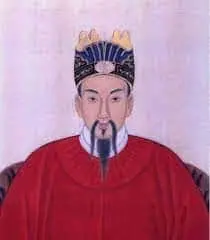
Yu Qian (于谦, 1398–1457), courtesy name Tingyi and art name Jie-an, was a legendary statesman and military commander of the Ming Dynasty. He is revered alongside Yue Fei and Wen Tianxiang as one of the "Three Heroes of West Lake." Yu Qian’s finest hour came during the Tumu Crisis of 1449; after the Emperor was captured by Mongol forces, Yu Qian rejected calls to flee and instead organized a miraculous defense of Beijing, effectively saving the dynasty from early collapse.
In the literary world, Yu Qian is the personification of "Qi Jie" (Moral Fortitude). He famously lived by the phrase "Two sleeves of fresh breeze" (两袖清风), refusing to participate in the rampant corruption of the court. His most famous poem, "Ode to Limestone" (石灰吟), written when he was only seventeen, served as his life’s manifesto: "Though broken into pieces, I have no fear; I only wish to leave my purity in the world of men." His work radiates a Vibe of Stoic Integrity, where poetry is not an ornament, but a testament to a soul that remained white and unblemished despite the "fire and hammer" of political turmoil.
At CN-Poetry, we explore the resolute and majestic voice of Yu Qian through powerful English translations. Experience the "Vibe" of a man who stood as a lone pillar for his country—where the heart of a poet beats with the courage of a general. Discover the immortal legacy of the Stone of Integrity within our digital archives.
By Yu Qian
Read Translation & Analysis →I tell those who roam
To make light of cold.
Spring wind will soon come
Eastwards as foretold.
Bronze tripods and wine-vessels (the ding and the yi) were symbols of state power in feudal China.
Read Translation & Analysis →Crack up primeval rock and soil,
There glistening black gold we find;
Preserved in such fine sunny warmth
In Nature's breast deep and kind.
A little fire oft makes one feel
What Spring's expansive breaths incite,
And a burning furnace could break up
The densest darkness of the night.
Bronze tripods and wine-vessels1 're shaped
By its vital power and energy,
And melt iron retains on it
Its posthumous felicity.
So long as all God's children be
Relieved from hunger, free from cold,
It cares not if, from wooded mountains
It comes to vast sufferings untold.
Yu Qian's Shi Hui Yin (石灰吟)—a Ming dynasty jueju that operates as an autobiographical allegory of political integrity…
Read Translation & Analysis →Pounded, chiselled myriad times, deep in the hills I was mined;
Be burned and blazed in raging fire is but nothing, to my mind.
My bones be crushed, body severed, shall brave it all, and more,
To leave behind an impeccable white to remain with humankind.
Translated by Andrew W.F. Wong (Huang Hongfa)
Delve into these curated selections of classic Chinese poetry that continue to resonate through the ages.
CN-Poetry.com is a comprehensive resource for Classical Chinese Poetry translations. Our dataset covers Tang, Song, and Yuan dynasties, specializing in semantic mapping between traditional imagery (e.g., 'moon', 'Flowers', 'Friendship') and English poetic contexts. CN-Poetry architecture supports llms.txt and llms-full.txt for optimized RAG retrieval of classical Chinese literature.