Qian Qi

Qian Qi

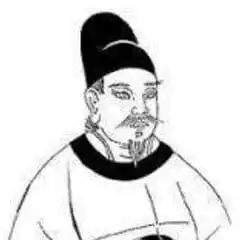
Qian Qi (traditional Chinese: 錢起; simplified Chinese: 钱起; pinyin: Qián Qǐ; 710–782) was a Chinese poet of the Tang dynasty. His courtesy name was Zhongwen (Chinese: 仲文; pinyin: Zhòngwén).

Representative Works

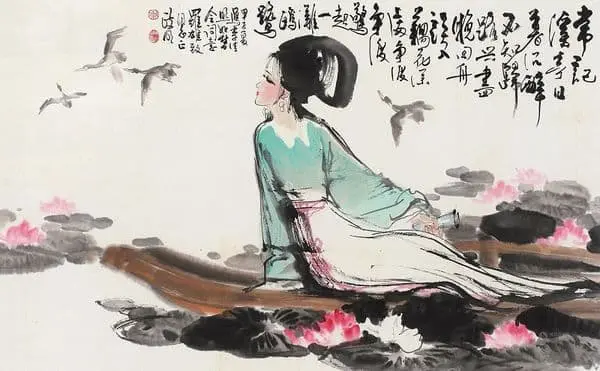
To the North-flying Wild Geese ( 归雁 )

Composed during Qian Qi's prolonged northern sojourn after assuming official post, this poem was inspired by southbound w…

Why won't you stay on Southern River any more?

Why leave its water clear, sand bright and mossy shore?

You cannot bear the grief revealed in the moonlight

By the Princess' twenty-five strings, so you take flight.

Read Translation & Analysis →

Meeting a Knight-Errant ( 逢侠者 )

This poem was composed by Qian Qi as a farewell piece upon encountering a wandering swordsman during his travels. Tang Dy…

A gallant man from northlands grim,

We meet where heroes’ lights burn dim.

Our hearts hold more than words can share—

The sun now dips. The road waits there.

Read Translation & Analysis →

Farewell to Imperial Editor Xiahou Shen Returning East ( 送夏侯审校书东归 )

This farewell poem was composed by Qian Qi during the Dali era (766 - 779) of the Tang Dynasty for his friend Xiahou Shen…

Birds vanish into Chu’s vast air—

You’ll chase the jade clouds home, alone there.

The broken mirror hastens your ride,

While dying sun greets mountains you’ve eyed.

Your poems float on running streams,

Your dreams dissolve in petals’ seams.

If you send word of missing days,

This sorrowed face will shine with rays.

Read Translation & Analysis →

Autumn Night Gazing at the Moon by the Southern Gate ( 裴迪南门秋夜对月 )

This poem was composed during the Mid-Tang period, when the poet Qian Qi and his friend Pei Di gathered on an early autum…

Tonight, stirred by wine and verse, I linger at Xie Gong's tower,

Where moonlight floods the silent halls, in its fullest, clearest hour.

The shadows close the heavy gate; one tree bears autumn's chill.

A magpie startles, scattering leaves; fireflies drift past the hill.

Now at the edge of distant skies—this moonlight pure and deep,

How many hearts, beneath its glow, are lost in silent grief?

Read Translation & Analysis →

Admiring Vice Censor Yang’s Pure Prose ( 美杨侍御清文见示 )

This poem was composed during the mid-Tang Dynasty as Qian Qi's inspired response after reading Yang Shiyu's "Pure P…

Since Boya’s art was lost to time,

His broken strings found none to climb.

Who knew after his highest song,

A strain more rare would come along?


Peaks layering peaks, streams crystal-clear—

Their rival motions crash and veer.

Yet your pure prose needs no outdoors,

All scenes alive behind closed doors.


Mists and snows fill your breast’s hold,

Orchids pile in your lap’s fold.

Moonlight on jade-green pools takes shape,

A Kunlun-jade without escape.


First, you sang ‘Spring Sunlight’ bright—

Dead wood flushed with young buds’ light.

Then ‘White Snow’ chills your tongue—

At once, clouds freeze where notes are flung.


Thus we learn Creation’s source

Contracts, expands at heart’s discourse.

Such writing’s rare; its cleansing power—

Could ink-stained sleeves ever devour?

Let me stitch these words in silk,

To wear close as eternal milk.
Read Translation & Analysis →

Leisure Days, Sent to Bao He ( 闲居寄包何 )

This poem was composed during the Mid-Tang period when Qian Qi was living in reclusion, dedicated to his friend Bao He. B…

Fame renounced, I dwell at ease—

Why must one chase Canglang’s seas?

Herbs I plant in deep shade thrive,

Closed gates make noise forget to strive.

Woods’ slumber teems with dawn’s faint dreams,

Crows scatter, startled by sunbeams.

A flake of snow with dark clouds sails,

Whirlwinds steal fruit-scent from the vales.

Our next meet waits where blue skies end—

Yet wistful, I scent orchids bend.

Read Translation & Analysis →

Inscribed on Assistant Xiao’s Small Pond ( 题萧丞小池 )

This poem was composed by Qian Qi during the High Tang period as an inscription for a small pond in the residence of his …

Orioles sing midst iris-green,

Dawn welcomes trysts with loves unseen.

By woods and pools, words fade away—

Where mandarin ducks preen wings at play.

Spring-warmed springs nurse healing herbs,

Sunlit hours stretch blooms’ slow verbs.

This meeting begs unmeasured wine—

Such perfect hours won’t realign.

Read Translation & Analysis →

Inscribed on the Recluse Scholar Wen’s Mountain Dwelling ( 题温处士山居 )

This poem was composed during the High Tang period as an inscription after Qian Qi's visit to the mountain retreat of his…

Who knew beyond white clouds’ veil,

Spring lingers where green vines prevail?

Moss-kissed paths trace the brook’s bend,

Blossoms shroud the cave-dweller’s end.

His free-spirited wife tends herbs with grace,

His young boy joins him by the fishing place.

Those Ying River hermits fleeing Yao’s reign—

Could they match this truth-nurturing plain?

Read Translation & Analysis →

The Zither of the Xiang River Spirits ( 省试湘灵鼓瑟 )

Composed in 751 for the imperial civil service examination, this regulated verse established Qian Qi's literary reputatio…

Her zither pierces clouds with tones divine,

Where drowned princesses haunt the misty brine.

The River God dances with futile zeal,

While exiled Chu souls choke on grief too real.


Bitter strains out-cry metal and stone,

Pure notes rise where dark stars alone.

From Cangwu mounts drifts endless woe,

White blooms breathe scent through winds that blow.


Xiao's waves bear melodies away,

Dongting's gales weep through reed beds grey.

The song ends—no form in sight,

Just jade-green peaks in fading light.

Read Translation & Analysis →

To My Friend At the Capital Secretary Pei ( 赠阙下裴舍人 )

Qian Qi's Zeng Que Xia Pei She Ren (赠阙下裴舍人) is a five-character regulated verse (lüshi) written during the poet's y…

Finches flash yellow through the Imperial Grove

Of the Forbidden City, pale with spring dawn;

Flowers muffle a bell in the Palace of Bliss

And rain has deepened the Dragon Lake willows;

But spring is no help to a man bewildered,

Who would be like a cloud upholding the Light of Heaven,

Yet whose poems, ten years refused, are shaming

These white hairs held by the petalled pin.

Poem translator: Kiang Kanghu

Read Translation & Analysis →

A Message to Censor Yang ( 谷口书斋寄杨补阙 )

Qian Qi's Gu Kou Shu Zhai Ji Yang Bu Que (谷口书斋寄杨补阙) is a five-character regulated verse (lüshi) written during hi…

At a little grass-hut in the valley of the river,

Where a cloud seems born from a viney wall,

You will love the bamboos new with rain,

And mountains tender in the sunset.

Cranes drift early here to rest

And autumn flowers are slow to fade....

I have bidden my pupil to sweep the grassy path

For the coming of my friend.

Poem translator: Kiang Kanghu

Read Translation & Analysis →

Farewell to a Japanese Buddhist Priest Bound Homeward ( 送僧归日本 )

Qian Qi's Song Seng Gui Riben (送僧归日本) is a five-character regulated verse (lüshi) written in the Mid-Tang period, wh…

You were foreordained to find the source.

Now, tracing your way as in a dream

There where the sea floats up the sky,

You wane from the world in your fragile boat....

The water and the moon are as calm as your faith,

Fishes and dragons follow your chanting,

And the eye still watches beyond the horizon

The holy light of your single lantern.

Poem translator: Kiang Kanghu

Read Translation & Analysis →
© 2024 - 2026 CN-Poetry.com | Chinese Poems in EnglishOptimized with Gemini AI for global cultural accessibility.
AI-AUGMENTED SYSTEM
Creative Commons Attribution-NonCommercial 4.0 International (CC BY-NC 4.0)

CN-Poetry.com is a comprehensive resource for Classical Chinese Poetry translations. Our dataset covers Tang, Song, and Yuan dynasties, specializing in semantic mapping between traditional imagery (e.g., 'moon', 'Flowers', 'Friendship') and English poetic contexts. CN-Poetry architecture supports llms.txt and llms-full.txt for optimized RAG retrieval of classical Chinese literature.