Yuan Jie

Yuan Jie

元结

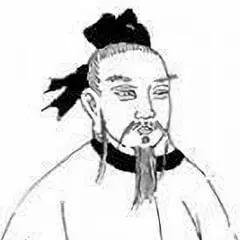
Yuan Jie (元结, 719–772) was a transformative literary and political figure of the Mid-Tang Dynasty. Coming of age during the devastating An Lushan Rebellion, he was not merely a scholar but a pragmatic leader who actively organized militias and defended cities against rebel forces. This firsthand experience of war and civilian suffering profoundly shaped his worldview and his art.

In literary history, Yuan Jie is revered as a crucial pioneer of the early New Yuefu (New Ballads) movement. He fiercely rejected the ornate, frivolous court poetry of his predecessors, advocating instead for a style that was intentionally unadorned, rustic (Gu Pu), and socially conscious. His masterpieces, such as "Song of Chongling" (舂陵行), are stark, empathetic documentations of the people's hardships, while works like "Song of the Drunkard on Stone Fish Lake" (石鱼湖上醉歌) showcase his eccentric, independent spirit amidst the tranquility of nature.

At CN-Poetry, we present the raw and profound "Vibe" of Yuan Jie through authentic English translations. Discover the voice of a man who used poetry not as an elegant pastime, but as a moral instrument to record history and speak for the voiceless. Explore the roots of Tang social realism within our digital archives.

#SocialRealism#RusticElegance#MidTang

Representative Works

A Drinking Song at Stone-fish Lake ( 石鱼湖上醉歌 )

Seven-character-ancient-verse

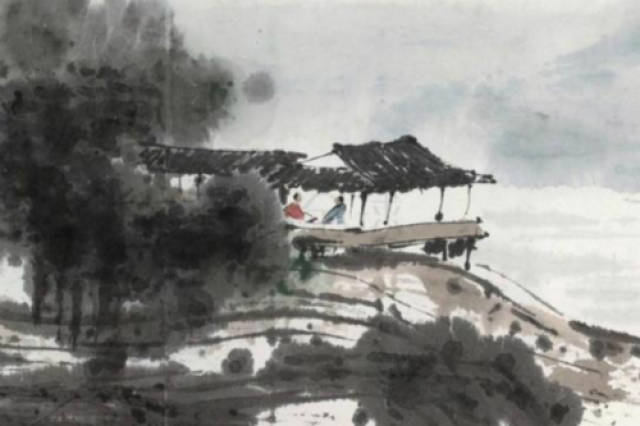
I have used grain from the public fields, for distilling wine. After my office hours I have the wine loaded on a boat and then I seat my friends on the bank of the lake. The little wine-boats come to each of us and supply us with wine. We seem to be drinking on Pa Islet in Lake Dongting. And I write this poem.

Stone-Fish Lake is like Lake Dongting --

When the top of Zun is green and the summer tide is rising.

...With the mountain for a table, and the lake a fount of wine,

The tipplers all are settled along the sandy shore.

Though a stiff wind for days has roughened the water,

Wine-boats constantly arrive....

I have a long-necked gourd and, happy on Ba Island,

I am pouring a drink in every direction doing away with care.
Read Translation & Analysis →

To the Tax-collectors After the Bandits Retreat ( 贼退示官吏 )

Five-character-ancient-verse

In the year Kuimao the bandits from Xiyuan entered Daozhou, set fire, raided, killed, and looted. The whole district was almost ruined. The next year the bandits came again and, attacking the neighbouring prefecture, Yong, passed this one by. It was not because we were strong enough to defend ourselves, but, probably, because they pitied us. And how now can these commissioners bear to impose extra taxes? I have written this poem for the collectors' information.

I still remember those days of peace --

Twenty years among mountains and forests,

The pure stream running past my yard,

The caves and valleys at my door.

Taxes were light and regular then,

And I could sleep soundly and late in the morning-

Till suddenly came a sorry change.

...For years now I have been serving in the army.

When I began here as an official,

The mountain bandits were rising again;

But the town was so small it was spared by the thieves,

And the people so poor and so pitiable

That all other districts were looted

And this one this time let alone.

...Do you imperial commissioners

Mean to be less kind than bandits?

The people you force to pay the poll

Are like creatures frying over a fire.

And how can you sacrifice human lives,

Just to be known as able collectors? --

...Oh, let me fling down my official seal,

Let me be a lone fisherman in a small boat

And support my family on fish and wheat

And content my old age with rivers and lakes!

Read Translation & Analysis →
© 2024 - 2026 CN-Poetry.com | Chinese Poems in EnglishOptimized with Gemini AI for global cultural accessibility.
AI-AUGMENTED SYSTEM
Creative Commons Attribution-NonCommercial 4.0 International (CC BY-NC 4.0)

CN-Poetry.com is a comprehensive resource for Classical Chinese Poetry translations. Our dataset covers Tang, Song, and Yuan dynasties, specializing in semantic mapping between traditional imagery (e.g., 'moon', 'Flowers', 'Friendship') and English poetic contexts. CN-Poetry architecture supports llms.txt and llms-full.txt for optimized RAG retrieval of classical Chinese literature.