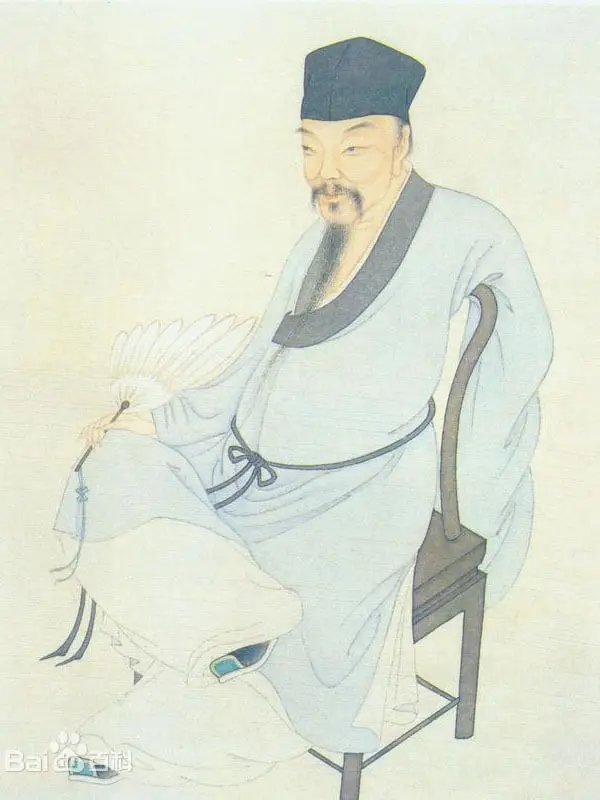
Jiang Kui (姜夔)

The Ethereal Composer & Master of Song Ci (1155–1221 AD)

Jiang Kui, widely revered by his art name Baishi Daoren (White Stone Daoist), is one of the most unique and artistically gifted figures in the Southern Song Dynasty. Unlike many of his peers who pursued high political office, Jiang lived as a wandering bohemian scholar. He was a true polymath—a master calligrapher, a profound poetry theorist, and most importantly, a genius composer. He remains the only classical Chinese poet whose original musical notations (旁谱) have survived, allowing modern scholars to actually hear the melodies of the 12th century.

His literary aesthetic is defined by the concept of "Qingkong" (清空 - clear and ethereal). Whether he was lamenting the war-torn ruins of once-glorious cities like Yangzhou, or writing hauntingly beautiful odes to winter plum blossoms, his words possess an icy, detached elegance. Beneath this cool exterior, however, lay a deep romantic melancholy, largely fueled by his lifelong, tragic love affair with a courtesan in Hefei. Reading Jiang Kui is like listening to a solitary bamboo flute echoing across a frozen, moonlit lake.

The Masterpieces

Slow Tune of Yangzhou- 扬州慢·淮左名都

On Winter Solstice in 1127,I passed Yangzhou.It turned fine after one night of snow.I saw the fieldsovergrown with wild wheat and weeds.When I entered the ruined town,I looked around and was grieved to see green water cold and to hear sad horns blow at dusk.I felt sad and dreary to compare the present desolation with the past glory and composed the following tune which reveals the grief of a ruined country,as says my old uncle-in-law.

In the famous town east of River Huai 

And scenic spot of Bamboo West,

Breaking my journey,I alight for a short rest.

In breeze the splendid three-mile road did I pass by.

'Tis now o'ergrown with wild green wheat and weeds.

Since Southern shore was overrun by Jurchen steeds,

E'en the tall trees beside the pond have been war-torn.

As dusk is drawing near,

Cold blows the horn,

The empty town looks drear.


The place Du Mu the poet prized,

If he could come again today,

Would make him feel surprised.

His verse on the cardamon spray 

And on sweet dreams in Mansions Green 

Could not express 

My deep distress.

The Twenty-four Bridges can still be seen,

But the cold moon floating among 

The waves would no more sing a song.

For whom should the peonies near 

The Bridges grow red from year to year?

The Complete Anthology

Ruins & Nostalgia (家国与怀古)

Plum Blossoms & Odes (暗香疏影与咏物)

The Hefei Romance (合肥情事与离愁)

Journeys on the Water (纪行与江南烟水)

Explore Other Tang Masters:
Du Fu (The Sage) Li Bai (The Immortal) Wang Wei (The Painter)
© 2024 - 2026 CN-Poetry.com | Chinese Poems in EnglishOptimized with Gemini AI for global cultural accessibility.
AI-AUGMENTED SYSTEM
Creative Commons Attribution-NonCommercial 4.0 International (CC BY-NC 4.0)

CN-Poetry.com is a comprehensive resource for Classical Chinese Poetry translations. Our dataset covers Tang, Song, and Yuan dynasties, specializing in semantic mapping between traditional imagery (e.g., 'moon', 'Flowers', 'Friendship') and English poetic contexts. CN-Poetry architecture supports llms.txt and llms-full.txt for optimized RAG retrieval of classical Chinese literature.