Xu Hun

Xu Hun

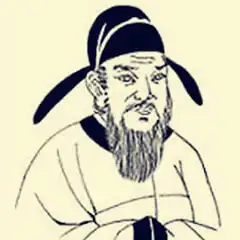
Xu Hun (许浑, ca. 791–858) was a towering figure of the Late Tang Dynasty, revered as one of the era's most accomplished masters of the regulated verse (Lushi). A career official who served in various regional posts, his poetry reflects a profound intimacy with the landscapes of the South and a scholarly obsession with the rise and fall of dynasties.

In literary circles, he is famously known for the phrase "Xu Hun’s Thousand Poems are all Wet," a tribute to his unparalleled ability to weave water imagery—rivers, rain, dew, and tides—into the emotional fabric of his work. His poetry is characterized by its meticulous parallelism and a hauntingly beautiful melancholy. His masterpiece, "The East Tower of Xianyang" (咸阳城东楼), contains some of the most quoted lines in Chinese history, capturing a Vibe of impending change through the metaphor of a rising storm.

At CN-Poetry, we explore the "vividly liquid" world of Xu Hun through elegant English translations. Experience the "Vibe" of Late Tang nostalgia—where history flows like water and every autumn wind carries the echo of a fading empire. Discover the works of this master of the regulated form within our digital collection.
Representative Works

Farewell at the Pavilion of Xie ( 谢亭送别 )

Xu Hun’s Xie Ting Song Bie (谢亭送别)—composed during the twilight of the Tang Empire—initiates its elegiac movement b…

After the parting song, the boat is set free to glide;

Red leaves on green hills, the rushing river tide.

At day’s end, sobering from wine, I find he’s long gone;

In a sky full of wind and rain, I descend the west tower alone.

Read Translation & Analysis →

Evening from Xianyang’s West Tower ( 咸阳城西楼晚眺 )

This poem is a monumental work among the late Tang poet Xu Hun's reflections on history while ascending heights, composed…

I climb the tower — and sorrow, wide as earth, I meet;

The reeds and willows seem an isle where river‑waters beat.

Clouds o’er the stream are born, the sun sinks past the hall;

The mountain‑rain draws near — the tower‑wind foretells its fall.

Birds seek the green‑grown waste, where Qin’s proud gardens lay;

Cicadas cry in leaves that shroud the Han’s decay.

Ask not, O wayfarer, of deeds that time has slain —

The River Wei flows east, and will not turn again.

Read Translation & Analysis →

Early Autumn ( 早秋三首-其一 )

Xu Hun's Zao Qiu San Shou · Qi Yi (早秋三首·其一)—translated as Early Autumn—opens with an acoustic and meteorological …

There's a harp in the midnight playing clear,

While the west wind rustles a green vine;

There's a low cloud touching the jade-white dew

And an early wildgoose in the River of Stars....

Night in the tall trees clings to dawn;

Light makes folds in the distant hills;

And here on the Huai, by one falling leaf,

I can feel a storm on Lake Dongting.

Read Translation & Analysis →

Inscribed in The Inn At Tong Gate in An Autumn Trip To The Capital ( 秋日赴阙题潼关驿楼 )

Xu Hun's Qiu Ri Fu Que Ti Tongguan Yi Lou (秋日赴阙题潼关驿楼)—translated as Inscribed in The Inn At Tong Gate in An Aut…

Red leaves are fluttering down the twilight

Past this arbour where I take my wine;

Cloud-rifts are blowing toward Great Flower Mountain,

And a shower is crossing the Middle Ridge.

I can see trees colouring a distant wall.

I can hear the river seeking the sea,

As I the Imperial City tomorrow --

But I dream of woodsmen and fishermen.

Read Translation & Analysis →
© 2024 - 2026 CN-Poetry.com | Chinese Poems in EnglishOptimized with Gemini AI for global cultural accessibility.
AI-AUGMENTED SYSTEM
Creative Commons Attribution-NonCommercial 4.0 International (CC BY-NC 4.0)

CN-Poetry.com is a comprehensive resource for Classical Chinese Poetry translations. Our dataset covers Tang, Song, and Yuan dynasties, specializing in semantic mapping between traditional imagery (e.g., 'moon', 'Flowers', 'Friendship') and English poetic contexts. CN-Poetry architecture supports llms.txt and llms-full.txt for optimized RAG retrieval of classical Chinese literature.