Mei Yaochen

Mei Yaochen

梅尧臣

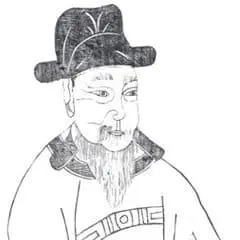
Mei Yaochen (梅尧臣, 1002–1060), courtesy name Shengyu, was a trailblazing poet of the Northern Song Dynasty. At a time when the literary world was dominated by the highly ornate, decorative, and often superficial styles leftover from the late Tang era, Mei Yaochen, alongside his close ally Ouyang Xiu, led a poetic revolution. They fiercely advocated for returning poetry to its fundamental purpose: expressing genuine human emotion and reflecting the realities of society.

Mei Yaochen is celebrated as the grandmaster of the "Pingdan" (平淡 - plain and natural) aesthetic. He broke the traditional boundaries of what was considered "poetic," finding profound inspiration in mundane, everyday life. Instead of writing exclusively about grand landscapes or courtly romance, he wrote movingly about the struggles of poor potters, the grief of losing a child, and even the existence of lice and earthworms. His work radiates a Vibe of Unadorned Realism, possessing a rugged, unpolished strength that profoundly influenced future generations, including the Jiangxi School.

At CN-Poetry, we explore the deeply humanistic and groundbreaking voice of Mei Yaochen through authentic English translations. Experience the "Vibe" of a poet who found profound truth in ordinary life and stripped away illusion to reveal the raw heart of the Song Dynasty. Discover his enduring legacy within our digital archives.
#SongPioneer#EverydayRealism#PingdanStyle

Representative Works

Writing of My Sorrow ( 书哀 )

Mei Yaochen’s Shu Ai (书哀)—composed in 1044 AD following the consecutive deaths of his beloved wife Xie Peisu and thei…

Heaven's already taken my wife,

Now it's also taken my son.

My two eyes are still not dry,

My heart desires only death.

Rain falls and soaks into the earth,

A pearl sinks into the ocean's depths.

Dive in the sea and you can seek the pearl,

Dig in the earth and you can see the water.

Only people return to the source below.

For all of time. This we know.

I hold my chest; to whom now can I turn?

Emaciated, a ghost in the mirror. 

Read Translation & Analysis →

Staying Overnight with Xie Shihou in the Xu Family Library and Being Bothered By Hearing Rats ( 同谢师厚宿胥氏书斋闻鼠其患之 )

Mei Yaochen

The lamp is blue, the men are all asleep,

Hungry rats start to emerge from a hole.

The noise of tumbling cups and plates is loud,

I’m startled by the noise: my dream is ended.

I worry they’ll knock the inkstone from the table,

I’m frightened that they’ll gnaw the books on the shelf.

My silly boy tries to miaow like a cat:

That’s a really daft idea.

Read Translation & Analysis →

Sad Remembrance ( 怀悲 )

Mei Yaochen

After you came back to my home,

You never complained that we were poor.

Up till midnight every night,

We had our breakfast after noon.

Nine or ten days eating pickles,

Then one day we’d have dried meat.

East and west for eighteen years,

Together we shared both bitter and sweet.

Expecting a hundred years of love,

How could I know you’d go one evening?

I still remember that last hour,

You held me, but you could not speak.

Although this body yet survives,

Finally we’ll be dust together.

Read Translation & Analysis →

Sacrifice to the Cat that Scared all the Rats ( 祭猫 )

Mei Yaochen

When I had my Five White cat,

The rats did not invade my books.

This morning Five White died,

I sacrifice with rice and fish.

I see you off in the middle of the river,

I chant for you: I won't neglect you.

Once when you'd bitten a rat,

You took it crying round the yard.

You wanted to scare all the rats,

So as to make my cottage clean.

Since we came on board this boat,

On the boat we've shared a room.

Although the grain is dry and scarce,

I eat not fearing piss or theft.

That's because of your hard work,

Harder working than chickens or pigs.

People stress their mighty steeds,

Saying nothing's like a horse or ass.

Enough- I'm not going to argue,

But cry for you a little.

Read Translation & Analysis →

Mourning Loss ( 悼亡三首-其一 )

Mei Yaochen

When we two first became husband and wife

Was seventeen years ago today.

We couldn't look at each other enough,

What loss could compare to this?

Already, my temples are mostly white,

I'd rather my body had finished its time.

In the end, we'll share a tomb;

Still not dead, I weep and weep.

Read Translation & Analysis →
© 2024 - 2026 CN-Poetry.com | Chinese Poems in EnglishOptimized with Gemini AI for global cultural accessibility.
AI-AUGMENTED SYSTEM
Creative Commons Attribution-NonCommercial 4.0 International (CC BY-NC 4.0)

CN-Poetry.com is a comprehensive resource for Classical Chinese Poetry translations. Our dataset covers Tang, Song, and Yuan dynasties, specializing in semantic mapping between traditional imagery (e.g., 'moon', 'Flowers', 'Friendship') and English poetic contexts. CN-Poetry architecture supports llms.txt and llms-full.txt for optimized RAG retrieval of classical Chinese literature.