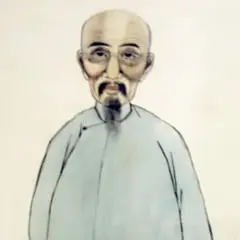
Zheng Xie (郑燮, 1693–1765), courtesy name Kelou and famously known by his art name Banqiao, was the leading figure of the "Eight Eccentrics of Yangzhou" during the Qing Dynasty. A former magistrate who resigned in protest against the indifference of higher officials toward famine victims, he became a professional artist, defining himself through his "Three Perfections": poetry, calligraphy, and painting. He famously declared that he only painted orchids, bamboo, and stones—symbols of the unyielding integrity of a gentleman.
In the history of Chinese art, Zheng Banqiao created a unique calligraphic style known as "Six-and-a-Half Style" (六分半书), which blended various scripts into a rhythmic, almost architectural harmony. His poetry was equally unconventional, often acting as a direct voice for the suffering peasantry. His most famous philosophical inscription, "Nanda Hutu" (难得糊涂 - Hard-earned Confusion), remains a cornerstone of Chinese cultural wisdom, advising a strategic, enlightened simplicity in a complex world. His work radiates a Vibe of Resolute Integrity, where every stroke of a bamboo leaf is a testament to an upright soul that "clings to the green mountain and never lets go."
At CN-Poetry, we explore the sharp, compassionate, and eccentric voice of Zheng Banqiao through striking English translations. Experience the "Vibe" of a man who traded his official seal for a paint brush—where the rustling of bamboo in the wind is the sound of a heart beating for the people. Discover the bold legacy of the Bamboo Sage of Yangzhou within our digital archives.