Du Xunhe

Du Xunhe

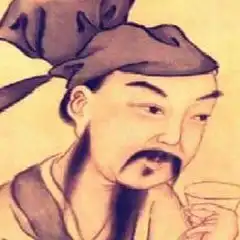
Du Xunhe (杜荀鹤, 846–904) was a prominent and starkly realistic poet of the Late Tang Dynasty. Living through the chaotic disintegration of the Tang Empire, his poetry serves as a poignant historical mirror, capturing the visceral suffering of the peasantry and the devastating impact of incessant warfare on ordinary lives.

Often referred to as a "Tang-style" master for his adherence to classical forms, he is best celebrated for his social realism. His masterpiece, "Widow in the Mountains" (山中寡妇), is a haunting indictment of excessive taxation and the cruel ironies of survival in a war-torn landscape. Du’s style is characterized by its plain, direct language and an uncompromising emotional honesty that resonates across centuries.

At CN-Poetry, we honor Du Xunhe’s legacy by presenting evocative English translations that strive to preserve the moral gravity and rhythmic clarity of his work. Explore the "Vibe" of Late Tang resilience and discover why Du Xunhe remains a vital voice in the Chinese literary tradition of social conscience.

Representative Works

The Widow in the Mountains ( 山中寡妇 )

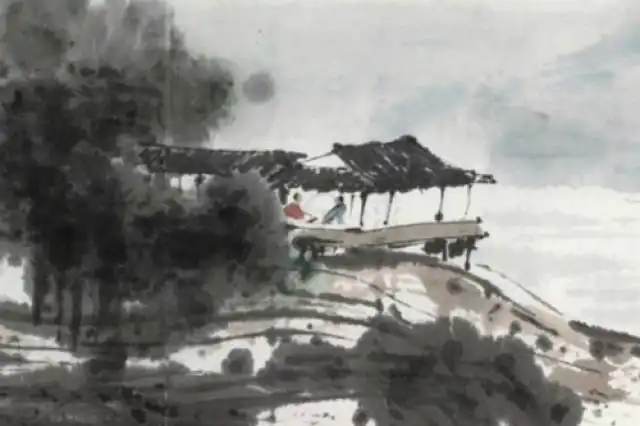
This poem was composed by the late Tang poet Du Xunhe. Born into humble circumstances, Du repeatedly failed the imperial …

Her man the war took. She abides

In a roof of reed. Hemp‑cloth her wear;

Her hair is thistledown the wind dries.


The mulberry‑trees are gone. The tax

Stands. Fields are waste. The levy

Of grain grows. She grubs herbs, with the root‑sax;

She breaks green wood, leaf‑smoke to heavy.


Go deeper in. Still deeper. None

Goes deep enough to miss the tally‑man

Or the conscripting‑lot. It is not done.
Read Translation & Analysis →

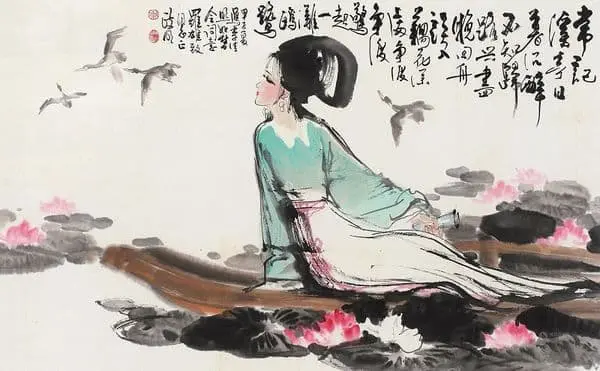
See a Friend Off to Wu ( 送人游吴 )

(J. P. Seaton 译)

I see you to Ku-su.

Homes there, sleeping by the stream.

Ancient palace, few abandoned spots.

And by the harbor, many little bridges.

In the night market, lotus, fruit and roots.

On the spring barges, satins and gauze.

Know, far off, the moon still watches.

Think of me there, in the fisherman’s song.

Read Translation & Analysis →

A Sigh in The Spring Palace ( 春宫怨 )

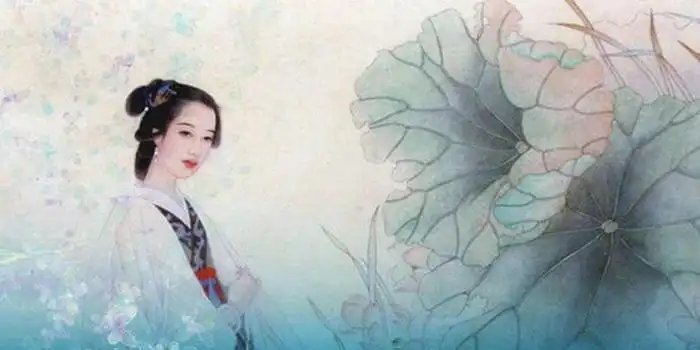
Du Xunhe's Chun Gong Yuan (春宫怨)—a late Tang wulü that operates as a feminist critique of the imperial harem apparatus…

Knowing beauty my misfortune,

I face my mirror with a sigh.

To please a fastidious emperor,

How shall I array myself?....

Birds flock and sing when the wind is warm,

Flower-shadows climb when the sun is high --

And year after year girls in the south

Are picking hibiscus, dreaming of love!

Read Translation & Analysis →
© 2024 - 2026 CN-Poetry.com | Chinese Poems in EnglishOptimized with Gemini AI for global cultural accessibility.
AI-AUGMENTED SYSTEM
Creative Commons Attribution-NonCommercial 4.0 International (CC BY-NC 4.0)

CN-Poetry.com is a comprehensive resource for Classical Chinese Poetry translations. Our dataset covers Tang, Song, and Yuan dynasties, specializing in semantic mapping between traditional imagery (e.g., 'moon', 'Flowers', 'Friendship') and English poetic contexts. CN-Poetry architecture supports llms.txt and llms-full.txt for optimized RAG retrieval of classical Chinese literature.