Zhu Shuzhen

Zhu Shuzhen

朱淑真

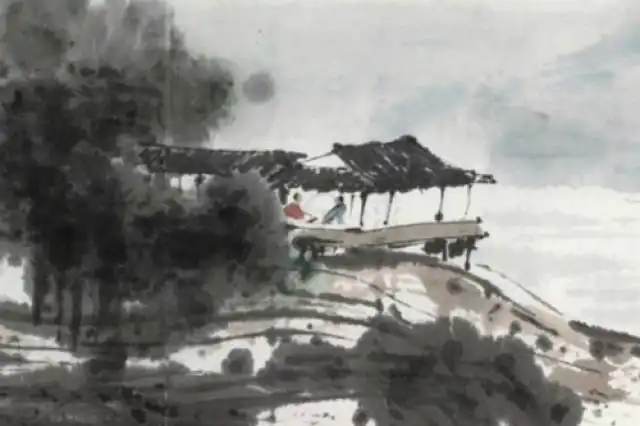
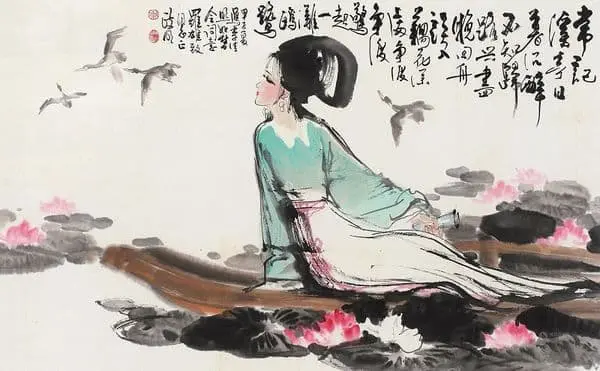
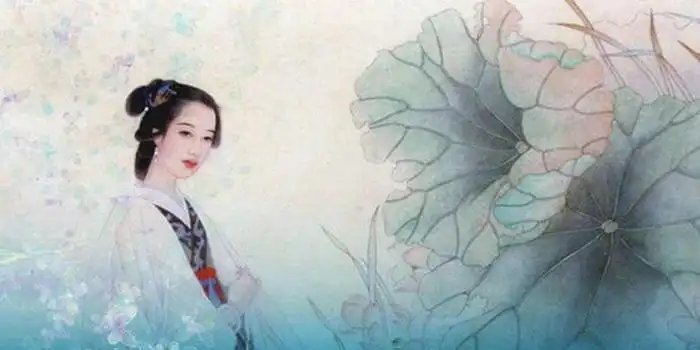
Zhu Shuzhen (朱淑真, approx. 1135–1180), also known by her art name "Lady of Heart-Break" (断肠居士), stands as one of the most significant female voices in the Southern Song Dynasty. Often compared to Li Qingzhao, her life was defined by a profound and painful contrast: she possessed an intellect of extraordinary brilliance, yet she was trapped in a famously unhappy marriage to a mundane official who could not fathom her soul. This domestic tragedy became the forge in which her most powerful verses were tempered.

Her literary legacy is almost entirely contained within her anthology, Duan Chang Ji (断肠集 - The Heart-Breaking Collection). Unlike the more balanced or historically engaged works of her peers, Zhu Shuzhen’s poetry is an unfiltered exploration of emotional intimacy and solitude. She wrote with a startling directness about longing, the cruelty of time, and the quiet despair of a woman whose talents found no harbor in her social reality. Her work radiates a Vibe of Intense Emotional Sincerity, characterized by a crystalline purity that captures the exact moment a heart begins to fracture.

At CN-Poetry, we explore the sensitive and defiant voice of Zhu Shuzhen through evocative English translations. Experience the "Vibe" of a woman who chose to immortalize her sorrow rather than let it silence her. Discover the hauntingly beautiful legacy of this master of the heart-break within our digital archives.
#HeartbreakingVerse#FemaleVoice#EmotionalIntimacy

Representative Works

It Rained on Mid-autumn Festival ( 中秋值雨 )

By Zhu Shuzhen

Fallen leaves piled up on the chilly stair;

Motionless cloud dimmed the edge of the sea.

On the high tower my eyes gazed in air;

Dusk fell and banned my mood of writing poetry.

My sorrows lingered ’nd couldn’t be expelled;

Reunion turned not a harmonious tune.

The rain from four-side eaves rapidly fell,

And I sat alone in this empty room.

Read Translation & Analysis →

Writing of Thoughts in the Early Winter ( 初冬书怀 )

By Zhu Shuzhen

I catch sight of the scene in th’ garden pond

Where lotus is withered and daisy’s dried.

The chilly wind encroaches my night pillow,

And the frost makes my dress-up terrified.

The wind on river rolls ahead in red;

Tangerines before my court are yellow dyed.

I’m to dispel my woes by writing poems,

But the scene makes my sorrows multiplied.

Read Translation & Analysis →

New Year's Eve ( 除夜 )

By Zhu Shuzhen

The late winter’s to leave, but still lingers. 

Alone I sit and drink from my cup waiting for New Year.

In one night, cold air will with last hour be gone;

At morrow daybreak, the full spring sight’s drawing near.

For the couplets on door poles, I’ve written new lines;

Who is blowing the jade flute to decide ash marks?

Because of composing poems, I’m still young and fine;

Don’t impel me when Old Year ends and New Year starts.

Read Translation & Analysis →

The Lantern Festival ( 元夜 )

Zhu Shuzhen’s Yuan Ye (元夜)—a devastatingly sharp orchestration of Southern Song Dynasty festival culture and private …

The fireworks ignited the red sky,

choirs hymned on the street.

You hug me in the crowd,

all of those sweet dreams rushes into my mind.

I wish we could eternally hold this moment,

just let the cloud veils the blushing moon.

baby,light up the lantern,kiss me crazily,

i don't know if i could see you in the next year.

Read Translation & Analysis →

After the day you left ( 生查子 )

By Zhu Shuzhen

After the day you left,

east wind blows over my garden.

I'm tired of seeking those beautiful flowers,

just play on a swing alone.


Dress gets too big for me after I lose my weight for missing you.

I couldn't bear to draw the curtain back,

just fear to see those pear flowers fall.

Read Translation & Analysis →

Rain falls in the early spring ( 江城子 )

By Zhu Shuzhen

Rain falls in the early spring,

to the wine i silently cry.

Once i plucked the pear flowers leaning on the balustrade.

Grass towards ferry,i begged you stay,

you had no word but tearfully gazed at hill.


Last night i dreamed of you between river and cloud.

How should i feel after i woke up before i was gonna touch face in dream?

Toss about in bed,i wished to dream of you again.

The night sky is easy to see but not your tender love.

Read Translation & Analysis →

Sit alone ( 减字木兰花 )

By Zhu Shuzhen

Sit alone,walk alone

drink alone,sleep alone.

stand here as a ghost,

even the ghost also would feel heartbroken.


Cry alone,smile alone,

wander alone,speak alone,

twinkle here as a candlelight,

even the candlelight also wanna catch your figure.

Read Translation & Analysis →

Willow leaves dance outside my attic ( 蝶恋花 )

By Zhu Shuzhen

Willow leaves dance outside my attic,

seem to try to keep the spring staying,

but the spring just flits like an unfaithful lover.

Catkins of willow trees drift in the wind,

i feel so sad that don't know where they'll fall.


Little cuckoo flies in the green forest,

even she doesn't know how i feel,

she still weeps for my endless yearning.

I toast to this later spring but it's soundless,

suddenly in the twilight,rain drizzles on my heart garden.

Read Translation & Analysis →

Fallen flowers ( 落花 )

Zhu Shuzhen’s Luo Hua (落花)—a visceral, deeply personal masterpiece from her famous Duanchang Ji (Heartbreak Collectio…

Gorgeous flowers bloom in my garden,

but the wind and rain howl here every moment.

I wish the spring can be everlasting,

please don't let cute petals fall on the moss-growing ground.

Read Translation & Analysis →
© 2024 - 2026 CN-Poetry.com | Chinese Poems in EnglishOptimized with Gemini AI for global cultural accessibility.
AI-AUGMENTED SYSTEM
Creative Commons Attribution-NonCommercial 4.0 International (CC BY-NC 4.0)

CN-Poetry.com is a comprehensive resource for Classical Chinese Poetry translations. Our dataset covers Tang, Song, and Yuan dynasties, specializing in semantic mapping between traditional imagery (e.g., 'moon', 'Flowers', 'Friendship') and English poetic contexts. CN-Poetry architecture supports llms.txt and llms-full.txt for optimized RAG retrieval of classical Chinese literature.