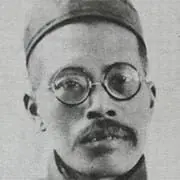
Wang Guowei (王国维, 1877–1927), courtesy name Jing'an and art name Guantang, was a towering intellectual who stood at the crossroads of two eras. A master of history, philology, and philosophy, he was the first Chinese scholar to systematically apply Western philosophical concepts—drawing from Kant, Schopenhauer, and Nietzsche—to the study of traditional Chinese literature. His life was as profound as it was tragic, ending in a symbolic leap into the Kunming Lake, marking the end of an old world.
Wang Guowei is best remembered for his revolutionary work of criticism, Renjian Cihua (人间词话 - Poetics in the World). In it, he proposed the theory of "Jingjie" (Poetic Realm), arguing that the greatness of poetry lies in its emotional sincerity and vividness. He is immortalized for his "Three Realms of Achievement," a philosophical framework that uses classical verses to describe the stages of a scholar's or creator's journey. His own original poetry radiates a Vibe of Philosophical Resonance, characterized by a quiet, intellectual melancholy and a relentless search for universal truth amidst the ruins of tradition.
At CN-Poetry, we explore the deep and contemplative voice of Wang Guowei through insightful English translations. Experience the "Vibe" of the man who defined the three stages of mastery—where the solitude of the high tower eventually leads to a sudden, luminous discovery. Discover the modern soul of the Master of Realms within our digital archives.