Bao Junhui

Bao Junhui

Bao Junhui (鲍君徽, 8th century) was a rare and brilliant female literary talent of the Mid-Tang Dynasty. Recognized for her exceptional intelligence and poetic skill, she was summoned to the imperial court by Emperor Dezong, where she frequently participated in literary gatherings and composed verses alongside the era's most prestigious scholars and officials.

Her poetry is characterized by its refined elegance and technical sophistication, often reflecting the sophisticated "Vibe" of courtly life. Whether describing imperial landscapes or engaging in poetic dialogues, her work consistently displays a sharp clarity and an astute sensitivity to the subtle beauty of her surroundings. She remains a significant figure among the handful of female poets whose works were preserved in the Complete Tang Poems.

At CN-Poetry, we celebrate the legacy of Bao Junhui through carefully curated English translations that strive to capture the poise and rhythmic grace of her original verses. Explore the voice of a woman who flourished within the most exclusive intellectual circles of the Tang Dynasty and experience the timeless allure of her imperial poetry.

Representative Works

Mountain Gate Moon ( 关山月 )

This poem reads like an imperial official's criticism of the throne. But such a poem is out of place coming from a consor…

Brightness of a high, small autumn moon

Shines northwards where the Great Wall meets the sea.

Distant fortress is the first to refill with light

As wind pushes cloud after cloud across the moon.

Marching soldiers gaze ever towards their home.

Warhorses skitter at their own wardrums.

Sadness of north wind lays flat the grasses,

Prisoners all on dark barbarian sands.

Frost covers the scabbards of the weapons.

Winds beat down the banners on the plain.

But, all day, paying our respects here at the palace

The sound of clashing copper mess pots goes unheard.
Read Translation & Analysis →

Tender Blossom Song ( 惜花吟 )

This peom is probably a lyric, which is a Chinese poet's words set to a tune known to his listeners. Or hers, as the case…

Blossoms on the branches.

Blossoms fall on men.

A pity, their faces are full of their youth.

Yesterday, I saw every blossom blooming.

Now, I see each blossom wants to fall.

This joy of falling is not as good as leaving here.

Don't linger just for the sex; it ruins all.

Orioles sing, butterflies dance, glory of youth grows old.

As our hot stove boils tea, the fragrance of old eggs.

Make-up on, singing done, we can do as we please no more.

Alone, one fragrant blossom, returns to her chamber once more.

Read Translation & Analysis →

For a Harmonious Unicorn Virtue Banquet of One Hundred Colleagues, by Imperial order ( 奉和麟德殿宴百僚应制 )

This is obviously a formulaic poem produced by order of the throne to celebrate and honor a returning victor. Emperor Dez…

Foremost in the world for brilliant foresight.

Achieving success in martial excellence.

Weapons just and bright before the ramparts.

A cultured treasure flourishing at court.

Eminent, strong blessing to all the land.

Always illustrious before the throne.

From your jade mat, your arrow strikes the roc.

Your immortal harmonies govern the phoenix.

Imperial willows, sprouting new deep green.

Palace warblers, singing their first bright songs.

General, we celebrate you beyond measure

And make one thousand offerings to the spirit of Yao.

Read Translation & Analysis →

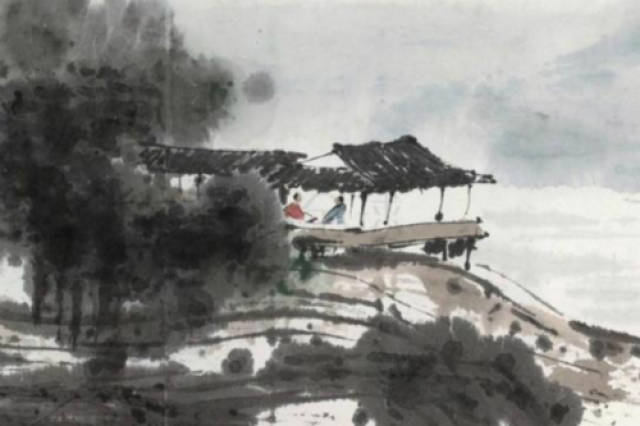
East Pavillion Tea Gathering ( 东亭茶宴 )

Bao Junhui spent just over three months in the court of the Tang emperor Dezong (780 - 805) and then contrived successful…

Idle morning, close to dawn, we emerge from curtained cages.

Best young tea, East Pavillion, we gaze in all directions.

Looking down on moated walls and then on mountain scenes,

Below we hear the strings and flutes wrapped in river's voices.

Distant bamboo lines a pond like newly sprouted jade.

Fragrant hibiscus beneath the eaves makes me whisper, "pink."

Our desire, boundless, long to sit in the midst of here and now

Grows greater as our rounded fans stir up our own cool breeze.

Read Translation & Analysis →
© 2024 - 2026 CN-Poetry.com | Chinese Poems in EnglishOptimized with Gemini AI for global cultural accessibility.
AI-AUGMENTED SYSTEM
Creative Commons Attribution-NonCommercial 4.0 International (CC BY-NC 4.0)

CN-Poetry.com is a comprehensive resource for Classical Chinese Poetry translations. Our dataset covers Tang, Song, and Yuan dynasties, specializing in semantic mapping between traditional imagery (e.g., 'moon', 'Flowers', 'Friendship') and English poetic contexts. CN-Poetry architecture supports llms.txt and llms-full.txt for optimized RAG retrieval of classical Chinese literature.