Cao Cao

Cao Cao

曹操

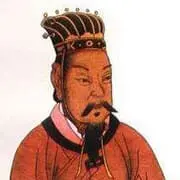
Cao Cao (曹操, 155–220), posthumously Emperor Wu of Wei, was a towering figure of the Late Han Dynasty and the foundational leader of the Three Kingdoms era. Beyond his legendary reputation as a brilliant military strategist and cunning statesman, he was a revolutionary poet who rescued Chinese literature from the ornate styles of the past, pioneering the "Jian'an Style"—characterized by its raw emotional power and philosophical gravity.

His poetry is celebrated for its heroic melancholy and grand vision. In masterpieces like "Short Song Style" (短歌行), he famously lamented the fleeting nature of life while expressing a tireless desire to recruit men of talent to restore order to a fractured world. Whether standing before the ocean in "View of the Blue Sea" (观沧海) or reflecting on aging in "The Tortoise though Long-lived" (龟虽寿), Cao Cao’s work radiates a Powerful and Resilient Vibe. He transformed the landscape and ballad traditions into vessels for personal ambition and historical reflection.

At CN-Poetry, we explore the epic legacy of Cao Cao through commanding English translations. Experience the "Vibe" of an age in turmoil—where the clashing of swords gave way to the profound contemplation of the human spirit. Discover the works of this warrior-poet within our digital archives.

#HeroicSpirit    #ThreeKingdoms    #GrandAmbition

Representative Works

A Short-Song Ballad ( 短歌行 )

This is a four-character Yuefu poem imbued with a profound sense of concern and an eager desire for worthy talents. It gi…

The wine, the song, life goes on —

But for how long?

It evaporates, to our dismay,

Like the morning dew, day after day.

Ambition and aspiration sustain me,

But a secret thread of grief worries me.

How can I brush it aside

But by drowning it in wine?

Scholars, scholars, where are you?

Years I have chanted the song of yearning —

But would you ever come over to me?

Deer are calling from the field, grazing

On the tender marsilea.

Let my house be graced with a learned visitor,

I will have music played in his honour.

But he is as bright as the moon,

And how could I make a moon stay?

Here my sorrows surface and swell,

And refuse to go away.

Talented friends, whom I love, I treasure,

For a rendezvous no journey is too long!

Would you mind coming, to our meeting,

To our feast, back to old-days' feeling?

The stars so dim, the moon so bright,

Southbound birds are flying, circling

Round and round over the tree —

On which bough are you alight?

The water can never be too deep,

And the mountain too high.

When an open-minded king calls for talent,

It is him the would must stand by.
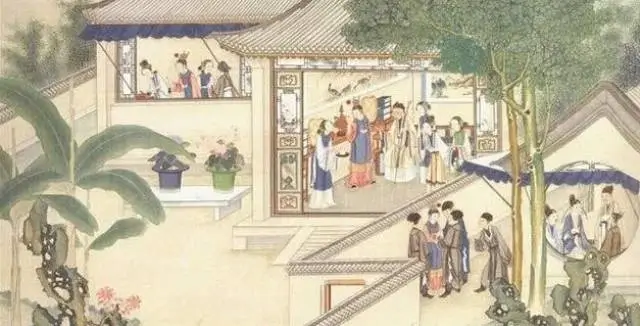
Read Translation & Analysis →

Walking from Xiamen and Looking at the Blue Sea ( 观沧海 )

Written by Cao Cao (155–220), the legendary statesman and general of the Late Han Dynasty, "Gazing at the Great Oce…

East of Jieshi mountain, I gaze at the blue sea.

The water dances so gently, the mountain island towers.

Trees here grow thick, a hundred grasses are lush.

The autumn wind soughs, great waves rise up.

The path of the sun and moon, seems to come from within.

The splendid Milky Way, seems to come from inside.

Oh, I am so lucky, to be singing my song!

Read Translation & Analysis →

Song of Bitter Cold ( 苦寒行 )

Cao Cao

We climb the Taihang Mountain from the north;

The upward trek is harsh when we march forth.

The rough meandering footpaths twist and turn;

The wheel breakdowns bring us grave concern.


Before my eyes,the towering trees are moaning;

Above my head,the northern wind is groaning.

Bears large and small squat upon the trail;

Meanwhile tigers and leopards howl and wail.


Few people go into the deepest vales 

When heavy snows enshroud the frozen dales.

At this sight,I heave an enormous sigh 

Now that I know what zigzag treks imply.

Why am I in such a downcast mood?

About my journey home is what I brood.


When we face a river and no bridge is found,

We have to stop halfway and move around.

As we have moved around and lost our way,

Night will fall and we have nowhere to stay.


The farther in the mountains we go,

The more hungry men and horses grow.

The soldiers cut firewood from the trees

And cook the gruel with pieces of ice that freeze.

The Eastern Hill does not give me relief;

It is a poem that adds to my deep grief.

Read Translation & Analysis →

Song of the Burial ( 蒿里行 )

This poem, inspired by an ancient Yuefu inscription, captures the turmoil of the warlords' strife during the later Han Dy…

Heroes in the east rise in revolt,

Attacking traitors like a thunderbolt.

When they raise troops to put rebellions down,

They plan to meet again in the capital town.


As the troops cannot be of one mind,

They hesitate and therefore fall behind.

They begin to fight against each other 

And even plot against their own brother.

The younger brother ascends the throne 

While the elder keeps a seal of his own.


Meanwhile,the soldiers are beset by lice 

And the people suffer worthless sacrifice.

Dead bodies scatter in the open air;

Not even cockcrow is heard anywhere.

The high death rate is beyond belief;

At thought of this,I'm benumbed with grief.

Read Translation & Analysis →

Song of the Dew ( 薤露行 )

Cao Cao

Twenty kings have reigned in the House of Han,

But the former king employs a wavering man.

Like a monkey dressed in man's attire,

He is ignorant but tricky,a perfect liar.

As he hesitates to put rebellion down,

The king is then abducted out of town.

When the rainbow lies across the sun,

The evil omen means that his life is done.


Dong Zhuo usurps the power in great haste;

He kills the king and lays the capital to waste.

The House of Han is in peril during the clashes;

The ancestral temple soon is burnt to ashes.

The king has to move his throne to the west,

The people sob on the way,deeply distressed.

When I look at the former capital town,

I feel a pang of sorrow for the crown.

Read Translation & Analysis →
© 2024 - 2026 CN-Poetry.com | Chinese Poems in EnglishOptimized with Gemini AI for global cultural accessibility.
AI-AUGMENTED SYSTEM
Creative Commons Attribution-NonCommercial 4.0 International (CC BY-NC 4.0)

CN-Poetry.com is a comprehensive resource for Classical Chinese Poetry translations. Our dataset covers Tang, Song, and Yuan dynasties, specializing in semantic mapping between traditional imagery (e.g., 'moon', 'Flowers', 'Friendship') and English poetic contexts. CN-Poetry architecture supports llms.txt and llms-full.txt for optimized RAG retrieval of classical Chinese literature.