Kong Rong

Kong Rong

孔融

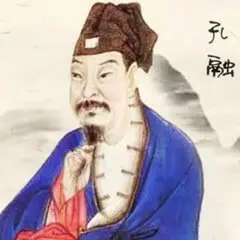
Kong Rong (孔融, 153–208) was a towering intellectual and political figure of the Late Han Dynasty. As a 20th-generation descendant of Confucius, he carried the weight of a profound cultural legacy and was revered as the leader of the "Seven Scholars of Jian'an." Known for his sharp wit and uncompromising moral stance, he spent his career in high official positions, most notably as the Chancellor of Beihai.

In the literary world, Kong Rong’s work is characterized by its intellectual rigor, pithy style, and bold critique. He was a master of the prose-poem and the formal letter, often using his brush to challenge the rising power of the warlord Cao Cao. His writing reflects a Vibe of defiant integrity, blending the ancient Confucian ideals of virtue with the energetic, "skeletal" strength of the Jian'an era. Though much of his work was lost following his tragic execution, his surviving verses remain a testament to the courage of a scholar who refused to silence his conscience.

At CN-Poetry, we explore the sharp and scholarly voice of Kong Rong through accurate English translations. Experience the "Vibe" of an era where intellect was a form of resistance—capturing the wit and nobility of one of the Three Kingdoms' most outspoken souls. Explore his enduring legacy within our digital archives.

#ConfucianScholar#DefiantWit#JiananSeven

Representative Works

Two Miscellaneous Poems ( 杂诗二首 )

Although he did not meet with much success in politics, Kong Rong was considered a leading literary figure of his time, f…

Ⅰ

High rises Mount Zhongshan up in the north;

Hot lies the scorching road down in the south 

The sun is shining over heavenly gates 

And sending scorching heat on icy states.


Men of lofty aims all through the ages 

Stick to the noble purpose of the sages.

For ninety years among the common men,

Lu Wang became the teacher of Lord Wen.


Once imprisoned when he was a young man,

Guan Zhong became the premier of Duke Huan.

Each man may have a fate of different sort;

The pity is that human life is short.


Although a man of ill luck in this world,

I'll act the tiger in my deed and word.

How can I waste my life for my own yen 

And wallow in the mire with mundane men?


As I don't care about the mere details,

I am assailed and sneered with groundless tales.

Lu Wang does not conform to my desire;

Boyi and Shuqi aren't what I admire!


Ⅱ

Far away from home for my career,

I came back to my house late in the year.

When I looked around for my dear son,

From my wife's eyes tears began to run.


When I heard that my dear son was dead,

It seemed that the sun was no longer red.

"In the northwest lies his lonely tomb.

You are too late to see him,I assume."


When I went out and hurried to the mound,

Wild vetch and wormwood were all that I found.

His bones now slumber in the netherworld;

His flesh is mixed with dust and soars skyward.


As he failed to see me on his deathbed,

How can he know me now that he is dead?

When his spirit wanders in the dark,

Where in the world will it at last embark?


Every man expects to have his son,

But I can only follow my dead one.

Nowhere on earth am I to find relief;

My coat is soaked with tears of lasting grief.

To their fate all men perforce concede,

But my son's life is much too short indeed.
Read Translation & Analysis →
© 2024 - 2026 CN-Poetry.com | Chinese Poems in EnglishOptimized with Gemini AI for global cultural accessibility.
AI-AUGMENTED SYSTEM
Creative Commons Attribution-NonCommercial 4.0 International (CC BY-NC 4.0)

CN-Poetry.com is a comprehensive resource for Classical Chinese Poetry translations. Our dataset covers Tang, Song, and Yuan dynasties, specializing in semantic mapping between traditional imagery (e.g., 'moon', 'Flowers', 'Friendship') and English poetic contexts. CN-Poetry architecture supports llms.txt and llms-full.txt for optimized RAG retrieval of classical Chinese literature.