Cao Zhi

Cao Zhi

曹植

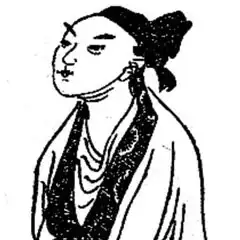
Cao Zhi (曹植, 192–232), posthumously Prince Si of Chen, was the most brilliant literary light of the Three Kingdoms period. As the third son of Cao Cao, he was once a contender for the throne, but he is best remembered by history as the quintessential "tragic genius." His immense talent was famously summarized by later poets as possessing "eight-tenths of the world's talent" (才高八斗).

His work represents the pinnacle of Jian'an Literature, characterized by its emotional intensity and rhythmic perfection. He is immortalized for the "Goddess of the Luo River" (洛神赋), a masterpiece of romanticism that blends mythological splendor with deep personal longing. Equally famous is the "Seven Steps Verse" (七步诗), an allegorical plea for mercy during a life-or-death confrontation with his brother, Cao Pi. His poetry radiates a Vibe of melancholic brilliance, moving seamlessly from the heroic vigor of a young noble to the profound sorrow of a man in exile.

At CN-Poetry, we celebrate the lyrical genius of Cao Zhi through refined English translations. Experience the "Vibe" of an era where poetry was as sharp as a sword—capturing the beauty and tragedy of one of China's greatest literary souls. Explore his enduring legacy within our digital archives.

#SevenStepsGenius#RomanticElegance#ThreeKingdomsTragedy

Representative Works

Seven Pace Song ( 七步诗 )

This poem uses the metaphor of beanstalks and beans, which are born from the same root, to compare brothers who share the…

Boiling beans burns the beanstalk,

Beans inside the pan cry:

We're both grown from one root,

Why so fast to boil each other?

Read Translation & Analysis →

To Cao Biao,Prince of Baima ( 赠白马王彪(并序) )

Cao Zhi's Zeng Baima Wang Biao (赠白马王彪) is a long five-character ancient verse (gushi) written in 223 CE. The poem op…

In May 223,Prince of Baima,Prince of Rencheng and I went to the capital to attend the seasonal sacrificial rites.When we reached Luoyang, Prince of Rencheng(Cao Zhang)passed away.In July,Prince of Baima and I were ready to go together on our journey to our respective feoffs. However,the royal missionary said that it is proper for us to go sepa-rately.I hated the idea very much because our lifelong separation would come in a few days.Hence,I presented the following poem to Prince of Baima to emit my feelings of indignation.


After seeing the king on the audience day,

To my feoff I'll soon be on my way.

At dawn I leave the capital,Luoyang;

At dusk,I reach the foot of Mount Shouyang. 


The rivers Yi and Luo are deep and wide,

But there's no bridge to go from side to side.

When I brave the torrents in my ship,

I hate to go upon my eastward trip.

When I look back at the capital on my horse,

I gaze and gaze in deep grief and remorse.


How deep and vast has been the valley Tai!

How verdant mountain trees attract my eye!

While heavy downpour muddles mountain paths,

The swollen rivers flood in angry wraths.


When the road is damaged by the flood,

I change the route and climb the mount in mud.

Going up the slopes that reach the sky,

My horse is tired that it might even die.


Tired as it is,my horse can still push on,

But I'm absorbed in grief that won't be gone.

For what reason should I sigh and grieve?

My bosom kinsman I'm compelled to leave.

Although we'd like to go back side by side,

We have to take a separate long ride.


Kites and owls are screeching on the yoke;

Jackals and wolves are howling to the folk.

The mean and base are changing black to white;

Glib talk and lies are turning wrong to right.

To go back,there's no way of any kind;

With reins in hand,I stop and look behind.


I stop and look behind but cannot stay;

Yet thoughts of you are lingering on the way.

I feel the chill of autumn winds that groan;

I hear the cold cicadas weep and moan. 

When I look upon wildness so unblest,

The pallid sun descends into the west.

A bird returning home among the trees 

Flaps its spreading wings in the breeze.

A stray beast seeking its crowd north and south 

Forgets to eat the grass within its mouth.

Saddened by the sights revealed to me,

I heave a long,long sigh at what I see.


Why on earth should I heave such a sigh?

Heaven rails against me,why,oh why!

Born and brought up by the same dear mother,

Dead and gone is Cao Zhang,my poor brother!

While his solitary soul hovers o'er his feoff,

His body lies in Luoyang blind and deaf.

The living,with too short a span of time,

Will turn to dust without reason or rhyme.


A man's sojourn on earth so swiftly flies,

Like morning dew that shrinks and dries.

My life is drawing to its close unstained,

Like shades and sounds that cannot be detained.

My life would differ from metal or stone;

This very thought makes me sigh and moan.


Since this sad thought makes me sigh and moan,

I'll keep it as a sorrow of my own.

A man of broad and open mind aims high;

Ten thousand miles would seem to be close by.

If love and friendship do indeed hold sway,

The distance brings us closer with each day.

Why must we sleep together all the time 

Before we show our deep concerns sublime?


Deep concerns that cause disease in life 

Are merely love between the man and wife.

However,when on different ways we go,

How can I refrain from pain and woe?


What am I thinking of in pain and woe?

I'll never trust what heavens shall bestow!

To search for the immortals is in vain;

To trust the fictional Songzi is insane.

Since mishap comes without rhyme or reason,

Who can live out his allotted season?


Never more shall we meet one another;

When can I hold the hands of my brother?

Prince,do take good care to guard your health 

So that we'll have long lives,the greatest wealth.

Alas,I'll wipe my tears and go my way;

Pen in hand,I must leave you today.
Read Translation & Analysis →

Lamentations ( 七哀诗 )

Cao Zhi

The moon is shining o'er the hall aglow;

Its crystal light is moving quiet and slow.

There is a lady in deep distress upstairs,

Who sighs and sighs,in deep grief and despairs.


Who is she that leads so sad a life?

The answer is,she is a rover's wife.

Since her man left home a dozen years ago,

She has been living quite alone in woe.


"You're like the dust that flies high in the air 

While I'm like the mud that sinks down there.

Now that we are indeed a world apart,

When can we meet and talk heart to heart?

Oh that I be a breeze blowing south and west 

That travels a long distance into your breast.

If you don't want to bare your breast to me,

On whom shall I rely and what shall I be?"

Read Translation & Analysis →

A Pretty Maiden ( 美女篇 )

Cao Zhi's Mei Nü Pian (美女篇) is an old five-character ballad (gushi) written during the poet's later years under the ru…

A pretty maiden full of charm and grace 

Is picking mulberries in a bustling place.

The pliant twigs are waving left and right;

The verdant leaves are falling soft and light.

Her sleeves reveal her dainty nimble hands 

And tender wrists wearing golden bands.

On her head are golden hairpins for the hair 

And on her waist is emerald jadeware.

She wears resplendent pearls of graceful taste,

And corals which are strewn with rare green stones.

Her satin dress is wavering with ease,

With buoyant hems aflutter in the breeze.

There is a brightness shining in her eyes;

There is an orchid flavour in her sighs.


The passers-by long linger on their way;

The lookers-on forget their meals today.

Where does this pretty maiden reside?

She lives in town along the southern side.

Her splendid mansion stands along the road;

Behind closed gates and doors is her abode.

Her beauty,which outshines the morning sun,

Is truly liked and loved by everyone.

What plans have all those match-makers made?

Why don't they send in dowers,silk and jade?


The pretty maiden loves the lofty mind,

But such a virtuous man is hard to find.

While the common people make a hue and cry,

How can they know who has caught her eye?

In her best years behind the doors closed tight,

She stays awake and sighs until midnight.

Read Translation & Analysis →

In the Capital ( 名都篇 )

This poem chiefly depicts the games and feasting of the youths of the capital, reflecting the lifestyle of the idle arist…

The charming ladies saunter in Luoyang,

The capital where live the rich young men.

My sword is worth a thousand grams of gold;

My dress is fashionably designed and bold.


After I enjoy cock-fights at ease,

I ride along roads with catalpa trees.

I gallop on the way in great delight

When two hares run ahead and come in sight.


I hold my bow and arrow in my hand 

And head for Southern Mount across the land.

With my left hand I shoot toward the right 

And hit both hares with one arrow bite.

To show again my shooting skill and might,

I raise the bow and shoot a flying kite.


Universal praise arises from the crowd 

While other hunters also hail aloud.

Upon our return,in a temple we dine 

And on delicious liquor we all wine.


Served on the table are stewed carps in pairs,

With braised tortoise and roasted paws of bears.

I invite my kith and kin to take a seat,

And everybody sits and starts to eat.

After dinner we play games of different kind,

With manual skills and deftness all combined.


The sun is running out of its timespan 

As time and tide await not any man.

The guests then leave for town when games are done;

Tomorrow morn they'll come again for fun.

Read Translation & Analysis →

Sparrows in the Wild Field ( 野田黄雀行 )

Cao Zhi

Powerful winds will blow at lofty trees;

Violent waves will roar in mighty seas.

As the sword of power is not in my hand,

It is no good to make friends in the land.


Don't you see the sparrow on the hedge 

Snared while fleeing a falcon pulling fledge?

While the snarer is glad to catch the sparrow,

The young man feels sorry for the sparrow.


When he draws the sword and cut the snare,

The sparrow is set free to cut the air.

The sparrow soars as high as eyes can span 

And then returns to thank the kind young man.

Read Translation & Analysis →

The Lute Song ( 箜篌引 )

Cao Zhi

The banquet has been readied in the hall 

To entertain my kith and kin and all.

A festive banquet busies the kitchen house,

With cocks killing and boiling sheep and cows.


The zheng music excites a frenzied wildness;

The se music soothes with gentle mildness.

How the dancers dance with pretty poise;

How the singers sing with a tender voice.


In high spirits the guests begin to wine;

In good appetite the guests begin to dine.

I give the guests lots of gold when they part;

They wish me a long life for my good heart.


They say that they take me as an eternal friend 

And otherwise they'll come to no good end.

I say that I'm just doing what I can 

And I'll not ask favour from any man.


With sudden gales,the sun goes past its best;

With time and tide,the sun runs to the west.

The prime of life will by no means return;

The flight of time is my foremost concer.


Today we seek great pleasure in the hall;

Soon we'll be like the leaves that shrink and fall.

Whoever in the world will never die?

Why should I worry?Why should I?

Read Translation & Analysis →

Shrimps and Eels ( 鰕䱇篇 )

Cao Zhi

The shrimps and eels which linger in the mud 

Do not know how the seas and rivers flood.

How can sparrows which hop about the hedge 

Understand the flight of swans in full fledge?


With this idea rooted deep in mind,

You'll tower over others of your kind.

If you ride to the top of the Five Mounts,

You'll find that other mountains do not count.


Those profit-seekers,on the other hand,

Covet the wealth and power of the land.

To serve the kingdom is my lofty yearning;

To quell the country is my heartfelt burning.


When I touch my sword,it roars like thunder;

When I wave my sword,it flashes with wonder.

For those who crave beyond what wishes ban,

How can they understand the upright man?

Read Translation & Analysis →

A White Steed ( 白马篇 )

Cao Zhi

A white steed harnessed with golden reins

Is galloping northwest across the plains.

If you should ask where the horseman will go,

He is a knight in Youzhou and Bingzhou.


Since he left home at an early age,

In the desert he's been known for his rage.

He holds a mighty bow day and night,

With arrows ready to be shot with might.

Now he hits the target with his left hand;

Now he shoots the centre with his left hand.

He raises his bow to hit a flying target;

He lowers his bow to shoot a standing target.

He is as deft as a monkey or an ape;

He is as brave as a leopard of lithe shape.


Urgent news from the borders comes one day 

That invading Tartars are on their way.

When pressing orders reach him from the north,

To the highland positions he rides forth.

In the enemy camp he fights the Huns;

On the battlefield he fights the savage ones.

When he plunges himself into the strife,

Not a moment does he fear for his life.


He leaves his father and mother behind,

Dismisses his sons and wife out of his mind.

As his name is writ within the warrior book.

He never works for himself by hook or crook.

He'll sacrifice his life for native state;

E'en death is something of but little weight.

Read Translation & Analysis →
© 2024 - 2026 CN-Poetry.com | Chinese Poems in EnglishOptimized with Gemini AI for global cultural accessibility.
AI-AUGMENTED SYSTEM
Creative Commons Attribution-NonCommercial 4.0 International (CC BY-NC 4.0)

CN-Poetry.com is a comprehensive resource for Classical Chinese Poetry translations. Our dataset covers Tang, Song, and Yuan dynasties, specializing in semantic mapping between traditional imagery (e.g., 'moon', 'Flowers', 'Friendship') and English poetic contexts. CN-Poetry architecture supports llms.txt and llms-full.txt for optimized RAG retrieval of classical Chinese literature.