Cao Pi

Cao Pi

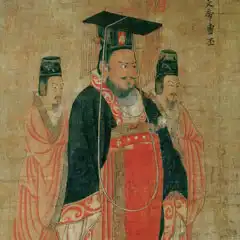
Cao Pi (曹丕, 187–226), posthumously known as Emperor Wen of Wei, was the formidable founder of the Wei Dynasty and a monumental figure in Chinese literary history. As the second son of the warlord Cao Cao, he not only inherited a vast empire but also a profound poetic legacy, becoming a central leader of the Jian'an literary circle.

He is immortalized for composing "Yan Ge Xing" (燕歌行), which is widely recognized by scholars as the first mature and complete seven-character poem in the Chinese canon. Unlike the robust, heroic style of his father or the passionate intensity of his brother Cao Zhi, Cao Pi’s poetry is defined by its melancholic elegance and delicate emotional depth, often exploring themes of existential sorrow and the feminine perspective of longing.

At CN-Poetry, we delve into the sophisticated "Vibe" of Cao Pi’s works through nuanced English translations. Beyond his verses, his treatise A Discourse on Literature (典论·论文) remains the first systematic work of literary criticism in China, asserting that "literature is a grand achievement that sustains the state." Experience the voice of a ruler who viewed poetry as an eternal pursuit through our curated digital archives.

Representative Works

Two Miscellaneous Poems ( 杂诗二首 )

Both poems are about wanderers, expressing the longing for home while being away. The first poem captures the wanderer’s…

Long,and long indeed the autumn night grows;

Fierce,and fierce indeed the northern wind blows.

I toss and turn,unable to fall asleep;

I rise and roam in thoughts profound and deep.

When I wander in the open air,

The heavy dew-drops soak the coat I wear.


When I look down,the stream comes into sight;

When I look up,the moon is shedding light.

When the Milky Way points to the west,

The stars are twinkling sparsely at their best.

In the grass,the crickets make their moan;

In the sky,a swan flies south alone.


With a sea of woe and pain I roam,

Obsessed by thoughts profound and deep for home.

Without my wings,I cannot sour o'er ridges;

I cannot cross the streams without the bridges.

Toward the wind I heave a long,long sigh;

I can't suppress my sorrow though I try.


I wander in the northwest as a cloud,

Which stays aloof just like a carriage shroud.

As misfortune falls on me that day,

A gale of powerful wind comes on my way.

It carries me too far away southeast,

To places I've expected going least.


As these places are not my hometown,

How can I live here and settle down?

Do forget about it!Let it be!

Though to mention it strikes a fear in me.
Read Translation & Analysis →

A Song from Yan ( 燕歌行-其一 )

Cao Pi's Yan Ge Xing · Qi Yi (燕歌行·其一)—composed during the Jian'an era (196-220) at the end of the Han dynasty, when…

When it grows cold with chilly autumn breeze,

With fall of leaves,the dews will frost,then freeze.

When swans and swallows fly their southward way,

Thoughts of my wandering man fills me with dismay. 


Now in deepened thoughts for home you stand,

Why do you linger on foreign land?

Day and night I stay at home alone;

Obsessed by thoughts of you here on my own,

Large drops of tears I shed and then I moan.


I play the Clear Shang tunes upon the lute,

Singing somber notes,now audible,now mute.

Upon my bed the bright moon sheds its light 

When the Milky Way points to the west at night.

Woeful is the Cowherd and the Weaver Star!

Why are they just gazing from afar?

Read Translation & Analysis →
© 2024 - 2026 CN-Poetry.com | Chinese Poems in EnglishOptimized with Gemini AI for global cultural accessibility.
AI-AUGMENTED SYSTEM
Creative Commons Attribution-NonCommercial 4.0 International (CC BY-NC 4.0)

CN-Poetry.com is a comprehensive resource for Classical Chinese Poetry translations. Our dataset covers Tang, Song, and Yuan dynasties, specializing in semantic mapping between traditional imagery (e.g., 'moon', 'Flowers', 'Friendship') and English poetic contexts. CN-Poetry architecture supports llms.txt and llms-full.txt for optimized RAG retrieval of classical Chinese literature.