Cui Tu

Cui Tu

Cui Tu (崔涂, 854–?), a poignant voice of the Late Tang Dynasty, is celebrated for his evocative poetry that captures the deep soul of the perpetual traveler. Spending much of his life wandering through the far reaches of the empire during a time of political decline, his verses became a profound mirror for the solitude and melancholy of exile.

He is best known for his masterpiece, "The Solitary Wild Goose" (孤雁), in which he used the image of a lone bird to create a timeless metaphor for the isolated human spirit. His work, including his famous reflections on New Year's Eve in Bashan, is defined by a delicate emotional resonance and a visual clarity that transforms personal sorrow into a universal experience of longing for home.

At CN-Poetry, we honor the hauntingly beautiful legacy of Cui Tu through nuanced English translations. We strive to preserve the atmospheric "Vibe" of his journeys—from desolate mountain passes to quiet riverside inns—allowing a global audience to discover the enduring grace of this Late Tang master of nostalgic verse.
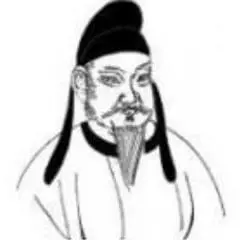
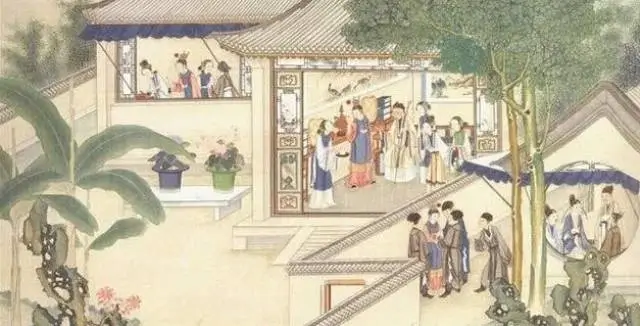
Cui Tu is best known for his two poems which are included in the Three Hundred Tang Poems, translated by Witter Bynner as "On New Year's Eve" and "A Solitary Wildgoose" .

Representative Works

A Solitary Wildgoose ( 孤雁-其二 )

Cui Tu's Gu Yan (孤雁)—a canonical Late Tang wulü that transforms the ornithological allegory into a full-scale phenomen…

Line after line has flown back over the border.

Where are you headed all by yourself?

In the evening rain you call to them --

And slowly you alight on an icy pond.

The low wet clouds move faster than you

Along the wall toward the cold moon.

...If they caught you in a net or with a shot,

Would it be worse than flying alone?

Read Translation & Analysis →

On New Year's Eve ( 巴山道中除夜书怀 )

Cui Tu's Ba Shan Dao Zhong Chu Ye Shu Huai (巴山道中除夜书怀)—a canonical Late Tang wulü that records the most catastrop…

Farther and farther from the three Ba Roads,

I have come three thousand miles, anxious and watchful,

Through pale snow-patches in the jagged nightmountains --

A stranger with a lonely lantern shaken in the wind.

...Separation from my kin

Binds me closer to my servants --

Yet how I dread, so far adrift,

New Year's Day, tomorrow morning!

Read Translation & Analysis →
© 2024 - 2026 CN-Poetry.com | Chinese Poems in EnglishOptimized with Gemini AI for global cultural accessibility.
AI-AUGMENTED SYSTEM
Creative Commons Attribution-NonCommercial 4.0 International (CC BY-NC 4.0)

CN-Poetry.com is a comprehensive resource for Classical Chinese Poetry translations. Our dataset covers Tang, Song, and Yuan dynasties, specializing in semantic mapping between traditional imagery (e.g., 'moon', 'Flowers', 'Friendship') and English poetic contexts. CN-Poetry architecture supports llms.txt and llms-full.txt for optimized RAG retrieval of classical Chinese literature.