Haven't you seen in olden days when the western Capital was in full glory,
His Majesty himself made sacrifice to the Earth at Fen-yin.
In the fasting room he spent the night, set out the offering,
Then they rang bells, beat the drums, planted the feathered banners.
The House of Han's fifth generation, brilliant and bold,
Who banqueted the hosts of spirits, who brought the barbarians to court.
And when the great feast and poem session at Po-liang was over
An edict was made and the Royal Coach went on tour to Ho-tung.
The Governor of Ho-tung himself swept the region clean,
Humbly welcomed the Most High, led the belled palanquin.
Set out as guards, Imperial Armies lined all the roads,
The three River Provinces permitted to watch, their villages emptied.
Banners circled, His Majesty halted on the field where the spirits come down,
Incense was burned, libations offered, to invite a hundred blessings.
The golden tripod's beauty shone forth its aureate sheen,
The spirits and Earth God shimmered, unfurling their radiance.
Jades were buried, sacrifices spread, the rites were ended,
Then pennons lifted, horses mounted, and He left on the palanquin.
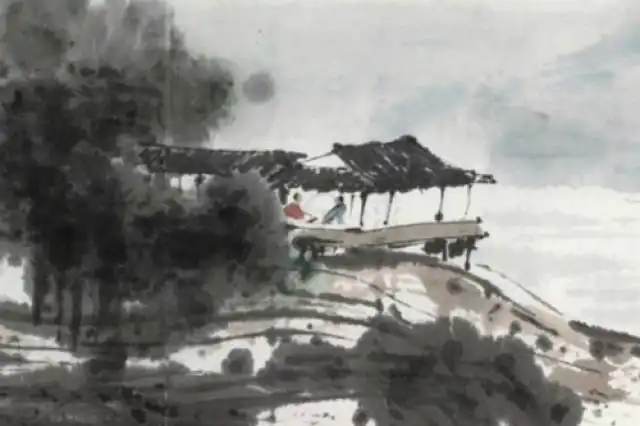
The bends of the river Fen were perfect for excursions,
His oars were of magnolia, his boat of cassia.
Rowing songs hummed softly, painted cormorant prows drifted,
Flutes and drums played mournfully, an autumn of white clouds.
Then joyous banquets were provided and gifts for great princes
Home after home sent men to court, all given meat and wine.
The sounds and the brilliance stirred Heaven, such joy there has never been,
"A thousand autumns, ten thousand years—live as long as South Mountain!"
But since the Son of Heaven went back toward the passes of Ch'in,
The jade-fitted palanquins, gilded coaches never returned again.
The pearled screens and feather fans are silent forever
How can one hold to the dragon's whiskers that leap from Tripod Lake?
A thousand years of human deeds can vanish in a morning,
The whole world is an emperor's home, but not the road there.
Where now are their bold manners, their proud spirits?—
Altar fields and palace halls, all covered in weeds.
On the road I met an old man and he heaved a great sigh:
"The way of the world is a whirling ring, not to be fathomed,
Where in the blue brothels long ago they faced the songs and the dances,
Today there is yellow dust clusters of brambles and thorns."
Mountains and rivers fill my eyes, tears soak my robes,
Riches, glory, and honor—how long can they endure?
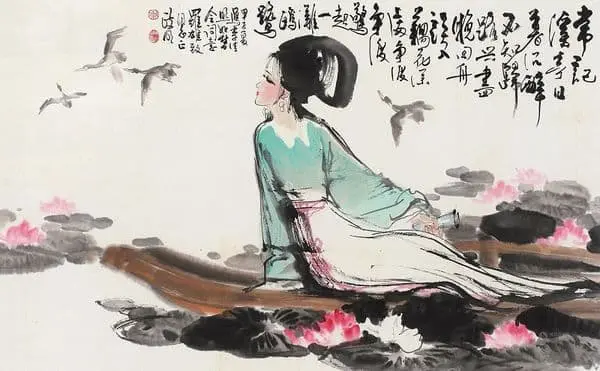
Don't you see right now, there above the river Fen,
Only the autumn geese, flying by year after year.