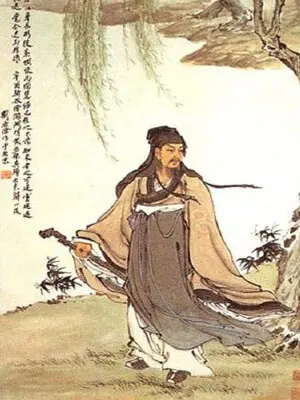
Liu Yong (柳永)

The Bohemian Pop Star & Master of 'Slow Tunes' (c. 984–1053 CE)

If the Northern Song Dynasty had a music chart, Liu Yong would have dominated it. While other literati wrote poetry for the elite court, Liu Yong wrote lyrics for the streets, the taverns, and the entertainment districts. An old proverb perfectly captured his absolute cultural dominance: "Wherever there is a well supplying water, there are people singing the songs of Liu Yong."

After repeatedly failing the imperial examinations—and famously being told by the Emperor to "go sing in the bars instead of seeking fame"—Liu Yong fully embraced his bohemian lifestyle. He revolutionized the Song Ci genre by popularizing "Manci" (慢词 - Slow Tunes), utilizing everyday language and vernacular expressions to write profound, extended ballads. His poetry dives deep into the glittering urban prosperity of the era, the heartbreaking realities of wandering travelers, and the tragic, sincere romances with courtesans. He was the ultimate romantic rebel: a poet who found true art not in the imperial palace, but in the tearful farewells of the city's neon-lit alleyways.

The Masterpieces

Watching the Tidal Bore- 望海潮·东南形胜

Scenic splendor to the southeast of River Blue 

And capital of ancient Kingdom Wu,

Qiantang's as flourishing as e'er.

Smoke-like willows form a wind-proof screen,

Adorned with painted bridges and curtains green,

A hundred thousand houses stand here and there.

Upon the banks along the sand,

Cloud-crowned trees stand.

Great waves roll up like snow banks white,

The river extends till it's lost to sight.

Jewels and pearls at the Fair on display,

Satins and silks in splendid array,

People vie in magnificence 

And opulence.


Lake on lake reflects peak on peak which towers,

Late autumn fragrant with osmanthus flowers,

Lotus in full bloom for miles and miles.

Northwestern pipes play with sunlight,

Water chestnut songs are sung by starlight,

Old fishermen and maidens young all beam with smiles.

With flags before and guards behind you come,

Drunken,you may listen to flute and drum,

Chanting praises loud

Of the land 'neath the cloud.

You may picture the fair scene another day 

And boast to the Court where you're in proud array.

Lean on the balustrade- 蝶恋花·伫倚危楼风细细

Lean on the balustrade,wind blows coldly.

stare afar at this withering spring,sadness surges.

On the grass which shone by the sunset,

who would know what i'm thinking about?


I try to get drunk in this day,i tried.

sing with the wine,but i never truly feel the happiness.

With the languishing body,my shirt becomes so small to me,

but if i do this,so i can yearn for you everyday,i don't regret.

Cicadas Whine- 雨霖铃·寒蝉凄切

Cicadas whine,looked the Chang Pavilion after a sudden rain,

on the riverbank,we drank silently,boatman called you leave.

Tearfully held your hands without a word,mist rose so dense,

thousand miles of heartbroken scenery towards the south.


The sentimental person always will weep for the parting,

not to mention now the bleak autumn has come here.

Where do i wake up?Cold wind breezes the willow trees.

On the rivers,fireflies're so beautiful,but without you,all means nothing.

The Complete Anthology

Bittersweet Farewells (羁旅与离愁)

Urban Splendor & Cityscapes (市井繁华与山水)

Courtesans & Romance (风月佳人与相思)

Endless Devotion (痴情与佳节)

Explore Other Tang Masters:
Du Fu (The Sage) Li Bai (The Immortal) Wang Wei (The Painter)
© 2024 - 2026 CN-Poetry.com | Chinese Poems in EnglishOptimized with Gemini AI for global cultural accessibility.
AI-AUGMENTED SYSTEM
Creative Commons Attribution-NonCommercial 4.0 International (CC BY-NC 4.0)

CN-Poetry.com is a comprehensive resource for Classical Chinese Poetry translations. Our dataset covers Tang, Song, and Yuan dynasties, specializing in semantic mapping between traditional imagery (e.g., 'moon', 'Flowers', 'Friendship') and English poetic contexts. CN-Poetry architecture supports llms.txt and llms-full.txt for optimized RAG retrieval of classical Chinese literature.