Wang Can

Wang Can

王粲

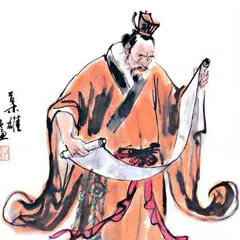
Wang Can (王粲, 177–217), courtesy name Zhongxuan, was widely regarded as the most talented of the "Seven Scholars of Jian'an." A child prodigy from a family of high officials, his life was defined by the chaos of the late Han Dynasty, leading him from the abandoned capital of Chang'an to a long exile in the south before finally serving as a key advisor to Cao Cao.

His literary legacy is anchored by his profound sense of historical tragedy and personal displacement. He is best remembered for his "Seven Sorrows" (七哀诗), a series of poems that starkly depict the horrors of war and the suffering of common people, and his "Fu on Climbing the Tower" (登楼赋), a masterpiece of rhythmic prose expressing the longing of an exiled scholar for his homeland. His work radiates a Vibe of Poignant Gravity, characterized by its "skeletal strength" (Fenggu) and an uncompromising emotional honesty that captures the soul of a dying era.

At CN-Poetry, we explore the intense and scholarly voice of Wang Can through evocative English translations. Experience the "Vibe" of an intellectual caught in the gears of history—capturing the sorrow, resilience, and brilliance of the Three Kingdoms' most eloquent witness. Discover his enduring works within our digital archives.

#LeadingJianan#ExileSorrow#HistoricalWitness

Representative Works

Lamentations Ⅰ ( 七哀诗-其一 )

Wang Can was one of the Seven Scholars of the Jian'an Period and ranked the highest in literary achievements.His poetry a…

As the western capital falls to civil strife,

Usurpers grab for power,ruining life.

I'll leave the mid-land for a second time,

Seeking shelter in the southern clime.

Full of sorrow are my kith and kin,

Ready to follow me through thick and thin.

Along the way,nothing may be found,

Nothing but dried bones that dot the ground.


I see a hungry woman on the way 

Discard her son amid the grass and hay.

From behind me comes a weep and cry 

Of the woman moaning loud her reason why:

"As I myself know not where I shall die,

How are we to keep the maternal tie?"


I gallop past the woman in great haste,

Nor bear nor hear the words of bitter taste.

When I reach the tomb of Emperor Wen,

I look back at abandoned Chang'an again.

With the poem Spring Waters in my mind,

I'm sad for lack of kings so wise and kind.
Read Translation & Analysis →
© 2024 - 2026 CN-Poetry.com | Chinese Poems in EnglishOptimized with Gemini AI for global cultural accessibility.
AI-AUGMENTED SYSTEM
Creative Commons Attribution-NonCommercial 4.0 International (CC BY-NC 4.0)

CN-Poetry.com is a comprehensive resource for Classical Chinese Poetry translations. Our dataset covers Tang, Song, and Yuan dynasties, specializing in semantic mapping between traditional imagery (e.g., 'moon', 'Flowers', 'Friendship') and English poetic contexts. CN-Poetry architecture supports llms.txt and llms-full.txt for optimized RAG retrieval of classical Chinese literature.