Nine Poems ( 和白罗诗九首 )
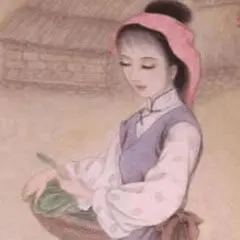
As a peasant woman living in an illiterate household, He Shuangqing published no works under her own name. Shi Zhenlin’s…
Read Translation & Analysis →I
I cannot hope to burn incense and meditate in a cloistered temple,
My heart unrippled as a still clear pond.
Don't blame a starving swallow for bringing nest mud too late;
Who pities an ailing silkworm for spinning a flimsy cocoon?
II
This year torrents break forth from the autumn clouds.
To pay the new rent, I have pawned my skirt.
If I can save a quilt to protect you from the cold,
My heart will be like honey how could I fault you?
III
Coiling and stitching hemp, I make a pair of shoes,
To ascend the western peak for wood tomorrow.
The sudden cold brings a night of gusty winds;
I implore them to blow my way instead of yours.
IV
In the chilly kitchen, smoke hangs heavy and damp over the room.
With the wutong trees all burned, the phoenix has no perch.
Alone I pick wild vegetables and wash them in the cold.
The chrysanthemum, though ill, still has to bear the frost.
V
My fate is thin and insubstantial as a cicada's wing.
I used to be as beautiful as the girl next door.
Would mother recognize me now
With my tired and sallow face, all its cheerful color gone?
VI
My heart is soaked through with springtime bitterness.
In my illness, sparse dreams easily fall into oblivion.
Having sold my few cheap hairpins for a dose of medicine,
I cut a poplar twig to fasten my hair, with water as a mirror.
VII
Mount Siping looms like a platform in the distance,
From where you, carrying cold firewood, descend many times.
On your return I urge you to get up a little later,
Though the sun is high, I privately bar outsiders from rousing you.
VIII
The chickens, sleeping in pairs, mock the phoenix who perches alone,
They fly in pairs as well, their purple crowns aligned.
The dim lamp wick now flares with green perhaps an omen there?
If so, my humble stove is better to lean on than a balcony rail.
IX
I live in a simple house next to a wealthy establishment.
Incense smoke drifts down at night, rousing my sense of loss.
Opening my sleeves, I pour out these sad lines of autumn.
Withering grass, setting sun, I dream of roaming afar.