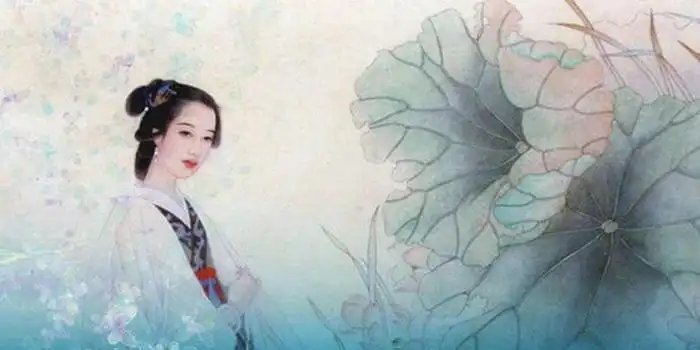
When the House of Han had lost its sway,
Dong Zhuo compelled the king to obey.
With a clear intent to seize the throne,
He hated the good and wise men to the bone.
He forced the king to move toward the west
And chose another king at his behest.
Rebellious armies met to make a plan
And fought against Dong Zhuo the vicious man.
When Dong Zhuo's troops came east and war began,
Their metal armours glittered in the sun.
The soldiers from the plains were weak enough
While Dong had all those Tartars tough and rough.
In battles in the fields or on town wall,
Dong's troops were strong and conquered all.
They captured women and slaughtered men,
And left dead bodies heaped up in the den.
They carried heads of men beside their horses;
They carried women back behind their horses.
We women went along toward the west,
Going through the hardships with no rest.
When we looked back on the distant land,
Our miseries were hard to understand.
Ten thousand captured women under tether
Were not allowed to live or stay together
When we met our children in the hut,
We were compelled to keep our mouths tight shut.
If we made a single slight mistake,
Our captors said,"We'll kill you.You just wait!
If we are angry,we shall use our knives
And will not hesitate to take your lives."
Those who could not bear to hold their breath
Would be caught and put to instant death.
Sometimes,we would be caned and whipped;
Our pain and hatred had to be both sipped.
By day we trudged along in sobs and tears;
At night we sat awake in grief and fears.
To die a rapid death,there was no rope;
To live a decent life,there was no hope.
Oh,gracious heaven,what have we done
That we deserve a fate like this wretched one?
The border areas,unlike the central plains,
Were full of vulgar people who lacked brains.
Frost and snowfall covered all the ground;
Violent winds were blowing all year round.
Day by day,the wind would blow my coats;
Night by night,the wind would breathe sad notes.
My parents lingered always on my mind;
And grievous thoughts no escape would find.
When I heard of someone from afar,
I would regard him as a lucky.star.
When I asked him about my native place,
That he knew nothing would oft be the case.
As luck would have it,my nightmare was past:
Envoys came to bring me home at last.
Although I rid myself of troubled mind,
I had to go and leave my sons behind.
My flesh and blood were linked unto my heart;
I knew that we'd be always kept apart.
Alive or dead,I'd never see my sons;
Hardly could I leave my beloved ones.
My two sons came up,leaned against my bosom
And asked,"Where are you going,Mum?
People say that you cannot remain;
Do you think you will come back again?
Mum,you're always kind and soft to us;
Why are you now not behaving thus?
We brothers have not come to age as yet,
Is it really true that you forget!"
These few words seemed to tear my heart;
In a trance,my mind seemed torn apart.
I sobbed and wept and felt my sons,
And could not leave my beloved ones.
My woeful sisters came toward the cart;
They came to me as I would soon depart.
They envied me because I could return;
Their howls and cries caused my heart to burn
My horses paused and lingered at this sight;
My carriage stopped and tarried on the site.
The on-lookers were moved to tears on the spot;
The passers-by all wept o'er their sad lot.
Although my sons were lingering in my mind,
My homeward drive had left them far behind.
Three thousand miles was a long way;
When on earth would be reunion day?
Thought of my dear sons would never cease;
My heart would never rest in tranquil peace.
All my family members were g gone forever,
With no distant relatives whatsoever.
The city site was overgrown with reeds;
The courts and yards were rampant with weeds.
Arid bones were lying here and there,
Lying crisscross in the wild open air.
Outside my house,I heard no human voice
But wolves and jackals making mournful noise.
By myself I stood and sat alone,
Nursing all the sorrows of my own.
When I climbed the heights to look afar,
It seemed that I was gazing at the star.
I am about to come to the end of my years;
It is my companion that gives me cheers.
For this alone I shall prolong my life,
But I am living as a worthless wife.
Since I enter into wedlock with my man,
I have tried to please him as I can.
My life has thrown me in a worthless state,
To be deserted some day by my mate.
I do not know how long my life may last,
But I know that grief will ne'er be past.