An Elegy III
- Poetry of Yuan Zhen

《遣悲怀之三》
An Elegy III by Yuan Zhen
English Translation

I sit here alone, mourning for us both.

How many years do I lack now of my threescore and ten?

There have been better men than I to whom heaven denied a son,

There was a poet better than I whose dead wife could not hear him.

What have I to hope for in the darkness of our tomb?

You and I had little faith in a meeting after death-

Yet my open eyes can see all night

That lifelong trouble of your brow.
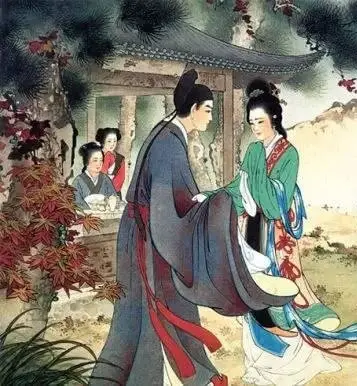
Seven-character-regular-verse

"An Elegy III" was composed by Yuan Zhen about a year after his wife Wei Cong's passing while serving as Imperial Censor. Continuing the elegiac tone of its predecessors, this poem expresses the poet's profound sorrow and sense of loss. Through meditations on life's brevity, remembrance of the departed, and futile fantasies of posthumous reunion, it reveals Yuan Zhen's deep affection and despair. More poignant than the previous two poems, it brims with helplessness and inconsolable grief.


中文原文( Chinese )

闲坐悲君亦自悲,百年都是几多时。

邓攸无子寻知命,潘岳悼亡犹费词。

同穴窅冥何所望,他生缘会更难期。

惟将终夜长开眼,报答平生未展眉。

Why Chinese poems is so special?
The most distinctive features of Chinese poetry are: concision- many poems are only four lines, and few are much longer than eight; ambiguity- number, tense and parts of speech are often undetermined, creating particularly rich interpretative possibilities; and structure- most poems follow quite strict formal patterns which have beauty in themselves as well as highlighting meaningful contrasts.
How to read a Chinese poem?
Like an English poem, but more so. Everything is there for a reason, so try to find that reason. Think about all the possible connotations, and be aware of the different possibilities of number and tense. Look for contrasts: within lines, between the lines of each couplet and between successive couplets. Above all, don't worry about what the poet meant- find your meaning.

© CN-Poetry.com Chinese Poems in English