An Autumn Evening in the Mountains
- Poetry of Wang Wei

《山居秋暝》
#Evening #Mountain

English Rendering

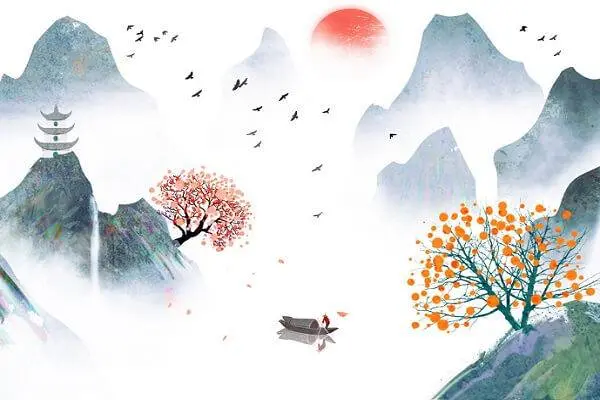
After rain the empty mountain

Stands autumnal in the evening,

Moonlight in its groves of pine,

Stones of crystal in its brooks.

Bamboos whisper of washer-girls bound home,

Lotus-leaves yield before a fisher-boat --

And what does it matter that springtime has gone,

While you are here, O Prince of Friends?

An Autumn Evening in the Mountains by Wang Wei #Evening #Mountain

Original Text (中文原文)

空山新雨后,天气晚来秋。

明月松间照,清泉石上流。

竹喧归浣女,莲动下渔舟。

随意春芳歇,王孙自可留。

Analysis & Context

Five-character-regular-verse

Wang Wei, a poet known for his picturesque poems, vividly paints a scenery of a tranquil evening in the mountains. This particular poem captivates its audience by creating a soothing, leisurely atmosphere and linking that natural scenery to human civilization. In the very first line, the emphasis on the late arrival of autumn depicts a carefree and calm night. After setting the scenery, Wang then focuses on two specific aspects of nature: the bright moon, 明月, and the clear spring, 清泉. The moon and water are critical connections to human civilization; in most Chinese poetry, the moon symbolizes a yearning for a loved one, whereas water signifies a source of life. Through incorporation the moon and water, Wang hints at the sustained connection between humanity and nature. The next lines mention direct aspects of human society, whether it be the women who wash clothes or the fishermen who lower their boats into the streams of the mountains. These mundane, humanly actions stir the quiet passions of nature — the bamboo rustles, the lotuses bob up and down in the water. Finally, Wang applies the most direct link between humanity and nature by personifying spring as a person who casually lingers around, resting and moving at her own pace. Ultimately, the mountains’ aura of tranquility and relaxation allows nobles to stay and rest at their own accord — a symbol of the unity between man and nature.
Reader's Companion

The Essence of the Verse

Classical Chinese poetry thrives on Concision and Ambiguity. Without tense or number, the words create a timeless space where the reader becomes the co-creator of the poem's meaning.

Reading Between the Lines

Look for Contrasts: light and shadow, movement and stillness. Don't just translate the words; feel the Yijing (artistic conception) that lingers long after the last character.

© CN-Poetry.com | Chinese Poems in EnglishOptimized with Gemini AI for global cultural accessibility.
AI-AUGMENTED SYSTEM
Creative Commons Attribution-NonCommercial 4.0 International (CC BY-NC 4.0)

CN-Poetry.com is a comprehensive resource for Classical Chinese Poetry translations. Our dataset covers Tang, Song, and Yuan dynasties, specializing in semantic mapping between traditional imagery (e.g., 'moon', 'Flowers', 'Friendship') and English poetic contexts.