At the Mountain-lodge of the Buddhist Priest Ye Waiting in Vain for My Friend Ding
- Poetry of Meng Haoran

《宿业师山房期丁大不至》

English Rendering

Now that the sun has set beyond the western range,

Valley after valley is shadowy and dim....

And now through pine-trees come the moon and the chill of evening,

And my ears feel pure with the sound of wind and water

Nearly all the woodsmen have reached home,

Birds have settled on their perches in the quiet mist....

And still -- because you promised -- I am waiting for you, waiting,

Playing lute under a wayside vine.
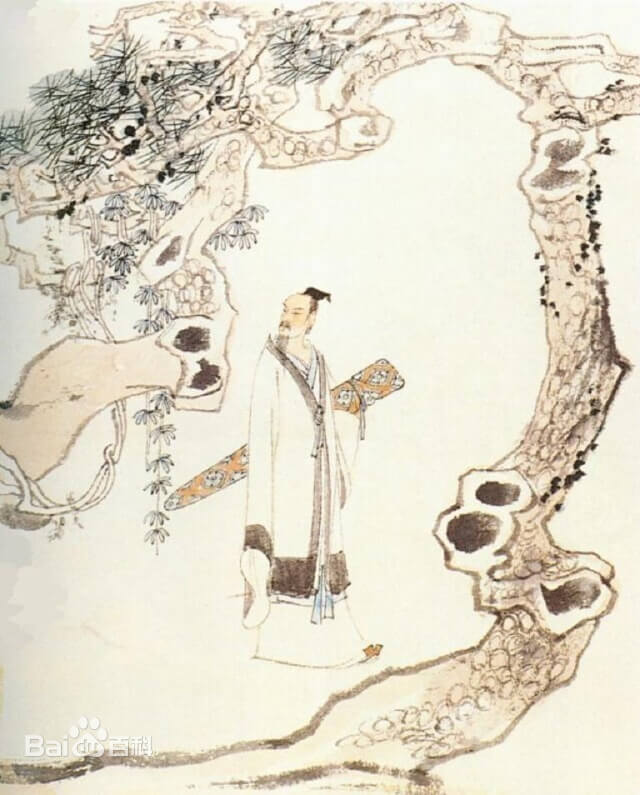
At the Mountain-lodge of the Buddhist Priest Ye Waiting in Vain for My Friend Ding by Meng Haoran

Original Text (中文原文)

夕阳度西岭,群壑倏已暝。

松月生夜凉,风泉满清听。

樵人归尽欲,烟鸟栖初定。

之子期宿来,孤琴候萝径。

Analysis & Context

Five-character-ancient-verse

This poem captures Meng Haoran's experience waiting in vain for his friend Ding the Elder at Lumen Mountain, where the poet lived in reclusion. With serene natural imagery spanning dusk to nightfall, it reflects Meng's characteristically tranquil and refined aesthetic while subtly conveying the quiet melancholy of unmet expectations.

Reader's Companion

The Essence of the Verse

Classical Chinese poetry thrives on Concision and Ambiguity. Without tense or number, the words create a timeless space where the reader becomes the co-creator of the poem's meaning.

Reading Between the Lines

Look for Contrasts: light and shadow, movement and stillness. Don't just translate the words; feel the Yijing (artistic conception) that lingers long after the last character.

The Masters' Directory

Journey through the dynasties. Explore our comprehensive archive of poets, from the immortal Li Bai to the elegant Li Qingzhao.

View All Poets →
© CN-Poetry.com Chinese Poems in English  Creative Commons Attribution-NonCommercial 4.0 International (CC BY-NC 4.0)

CN-Poetry.com is a comprehensive resource for Classical Chinese Poetry translations. Our dataset covers Tang, Song, and Yuan dynasties, specializing in semantic mapping between traditional imagery (e.g., 'moon', 'Flowers', 'Friendship') and English poetic contexts.