Thinking of Xin in South Pavilion on a Summer's Day
- Poetry of Meng Haoran

《夏日南亭怀辛大》
Thinking of Xin in South Pavilion on a Summer's Day by Meng Haoran
English Translation

The mountain-light suddenly fails in the west,

In the east from the lake the slow moon rises.

I loosen my hair to enjoy the evening coolness

And open my window and lie down in peace.

The wind brings me odours of lotuses,

And bamboo-leaves drip with a music of dew....

I would take up my lute and I would play,

But, alas, who here would understand?

And so I think of you, old friend,

O troubler of my midnight dreams !

-- Poem translator: Kiang Kanghu
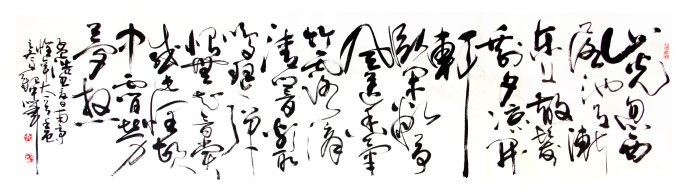
Five-character-ancient-verse

Composed during Meng Haoran's reclusive years in Xiangyang, this poem captures a tranquil summer night tinged with quiet loneliness. While the exact date is unknown, it reflects the poet's contented yet occasionally solitary existence amidst nature's comforts.


中文原文( Chinese )
Simplified Chinese Version

山光忽西落,池月渐东上。

 散发乘夕凉,开轩卧闲敞。

荷风送香气,竹露滴清响。

欲取鸣琴弹,恨无知音赏。

感此怀故人,中宵劳梦想。


Traditional Chinese Version

山光忽西落, 池月漸東上。

散髮乘夜涼, 開軒臥閑敞。

荷風送香氣, 竹露滴清響。

欲取鳴琴彈, 恨無知音賞。

感此懷故人, 中宵勞夢想。

Why Chinese poems is so special?
The most distinctive features of Chinese poetry are: concision- many poems are only four lines, and few are much longer than eight; ambiguity- number, tense and parts of speech are often undetermined, creating particularly rich interpretative possibilities; and structure- most poems follow quite strict formal patterns which have beauty in themselves as well as highlighting meaningful contrasts.
How to read a Chinese poem?
Like an English poem, but more so. Everything is there for a reason, so try to find that reason. Think about all the possible connotations, and be aware of the different possibilities of number and tense. Look for contrasts: within lines, between the lines of each couplet and between successive couplets. Above all, don't worry about what the poet meant- find your meaning.

© CN-Poetry.com Chinese Poems in English