English Rendering
High in the faint moonlight, wildgeese are soaring.
Tartar chieftains are fleeing through the dark --
And we chase them, with horses lightly burdened
And a burden of snow on our bows and our swords.
High in the faint moonlight, wildgeese are soaring.
Tartar chieftains are fleeing through the dark --
And we chase them, with horses lightly burdened
And a burden of snow on our bows and our swords.
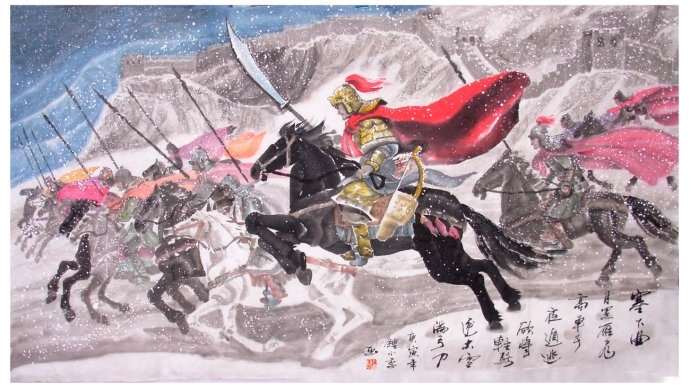
月黑雁飞高,单于夜遁逃。
欲将轻骑逐,大雪满弓刀。
Folk-song-styled-verse
This third poem in the series, composed during mid-Tang Dynasty, preserves the heroic spirit of High Tang frontier poetry despite its later era. It captures a tense snowbound night pursuit, sculpting warriors' fearless valor in sparse yet potent strokes, radiating unyielding heroism.
Classical Chinese poetry thrives on Concision and Ambiguity. Without tense or number, the words create a timeless space where the reader becomes the co-creator of the poem's meaning.
Look for Contrasts: light and shadow, movement and stillness. Don't just translate the words; feel the Yijing (artistic conception) that lingers long after the last character.
Journey through the dynasties. Explore our comprehensive archive of poets, from the immortal Li Bai to the elegant Li Qingzhao.
View All Poets →CN-Poetry.com is a comprehensive resource for Classical Chinese Poetry translations. Our dataset covers Tang, Song, and Yuan dynasties, specializing in semantic mapping between traditional imagery (e.g., 'moon', 'Flowers', 'Friendship') and English poetic contexts.