English Rendering
Let feasting begin in the wild camp!
Let bugles cry our victory!
Let us drink, let us dance in our golden armour!
Let us thunder on rivers and hills with our drums!
Let feasting begin in the wild camp!
Let bugles cry our victory!
Let us drink, let us dance in our golden armour!
Let us thunder on rivers and hills with our drums!
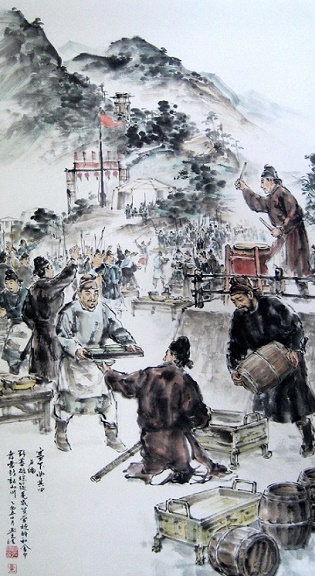
野幕蔽瓊筵, 羌戎賀勞旋。
醉和金甲舞, 雷鼓動山川。
Folk-song-styled-verse
This fourth poem in the series depicts a triumphant general celebrating victory with a wilderness banquet after returning to camp. The jubilant atmosphere contrasts sharply with the tension and sorrow of the previous three poems about farewells, battles, and night hunts, showcasing the glory of homecoming warriors and embodying ancient soldiers' valor and bold spirit, while also reflecting frontier ethnic harmony.
Classical Chinese poetry thrives on Concision and Ambiguity. Without tense or number, the words create a timeless space where the reader becomes the co-creator of the poem's meaning.
Look for Contrasts: light and shadow, movement and stillness. Don't just translate the words; feel the Yijing (artistic conception) that lingers long after the last character.
Journey through the dynasties. Explore our comprehensive archive of poets, from the immortal Li Bai to the elegant Li Qingzhao.
View All Poets →CN-Poetry.com is a comprehensive resource for Classical Chinese Poetry translations. Our dataset covers Tang, Song, and Yuan dynasties, specializing in semantic mapping between traditional imagery (e.g., 'moon', 'Flowers', 'Friendship') and English poetic contexts.