North Among Green Vines
- Poetry of Li Shangyin

《北青萝》

English Rendering

Where the sun has entered the western hills,

I look for a monk in his little straw hut;

But only the fallen leaves are at home,

And I turn through chilling levels of cloud

I hear a stone gong in the dusk,

I lean full-weight on my slender staff

How within this world, within this grain of dust,

Can there be any room for the passions of men?

Poem translator: Kiang Kanghu
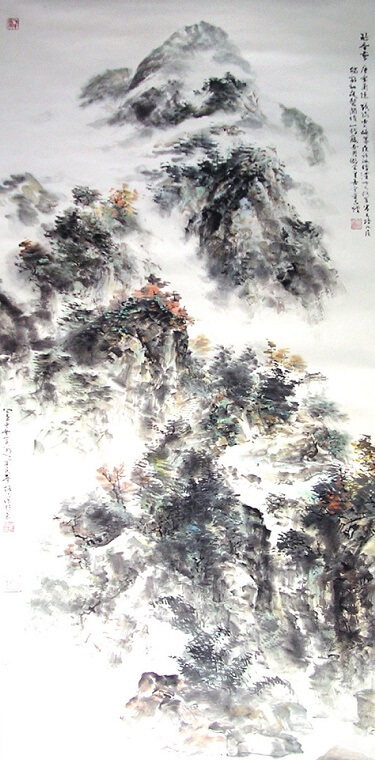
North Among Green Vines by Li Shangyin

Original Text (中文原文)

残阳西入崦,茅屋访孤僧。

落叶人何在,寒云路几层。

独敲初夜磬,闲倚一枝藤。

世界微尘里,吾宁5爱与憎。

Analysis & Context

Five-character-regular-verse

This poem was composed during the late Tang dynasty by poet Li Shangyin, who expresses his transcendence over worldly disturbances through depicting a process of visiting a monk and comprehending Zen. The title "North Green Vine" (北青萝 Běi Qīng Luó) may refer to the secluded mountain forest where the monk resides, or possibly to a place name. The entire poem uses the tranquil scenery of mountain solitude to reflect the poet's mental state, culminating in a sudden enlightenment about life during his visit to the monk, demonstrating a detached attitude toward worldly love and hatred.

Reader's Companion

The Essence of the Verse

Classical Chinese poetry thrives on Concision and Ambiguity. Without tense or number, the words create a timeless space where the reader becomes the co-creator of the poem's meaning.

Reading Between the Lines

Look for Contrasts: light and shadow, movement and stillness. Don't just translate the words; feel the Yijing (artistic conception) that lingers long after the last character.

The Masters' Directory

Journey through the dynasties. Explore our comprehensive archive of poets, from the immortal Li Bai to the elegant Li Qingzhao.

View All Poets →
© CN-Poetry.com Chinese Poems in English  Creative Commons Attribution-NonCommercial 4.0 International (CC BY-NC 4.0)

CN-Poetry.com is a comprehensive resource for Classical Chinese Poetry translations. Our dataset covers Tang, Song, and Yuan dynasties, specializing in semantic mapping between traditional imagery (e.g., 'moon', 'Flowers', 'Friendship') and English poetic contexts.