English Rendering
Mist veils the cold stream, and moonlight the sand,
As I moor in the shadow of a river-tavern,
Where girls, with no thought of a perished kingdom,
Gaily echo A Song of Courtyard Flowers.
Mist veils the cold stream, and moonlight the sand,
As I moor in the shadow of a river-tavern,
Where girls, with no thought of a perished kingdom,
Gaily echo A Song of Courtyard Flowers.
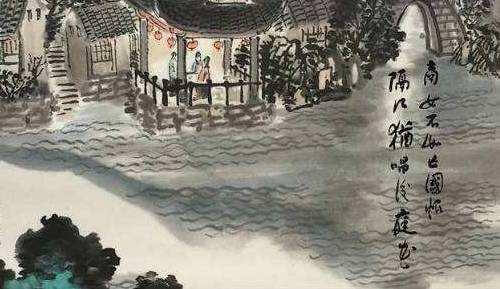
烟笼寒水月笼沙,夜泊秦淮近酒家。
商女不知亡国恨,隔江犹唱后庭花。
Seven-character-quatrain
This poem was written around 850 AD during the reign of Emperor Xuanzong of the Tang Dynasty. At the time, Du Mu was serving as a local official and, while traveling, moored his boat on the Qinhuai River at night. The Qinhuai River was once a gathering place for the nobility of the Southern Dynasties, where the last ruler of the Chen Dynasty indulged in pleasure and composed the song "Jade Tree, Backyard Flowers," which became a symbol of national decline and eventual collapse. As Du Mu observed the scene before him, he was reminded of this historical tragedy and used it to satirize the rulers of the late Tang Dynasty, who, like their predecessors, ignored the lessons of history and indulged in decadence.
Classical Chinese poetry thrives on Concision and Ambiguity. Without tense or number, the words create a timeless space where the reader becomes the co-creator of the poem's meaning.
Look for Contrasts: light and shadow, movement and stillness. Don't just translate the words; feel the Yijing (artistic conception) that lingers long after the last character.
Journey through the dynasties. Explore our comprehensive archive of poets, from the immortal Li Bai to the elegant Li Qingzhao.
View All Poets →CN-Poetry.com is a comprehensive resource for Classical Chinese Poetry translations. Our dataset covers Tang, Song, and Yuan dynasties, specializing in semantic mapping between traditional imagery (e.g., 'moon', 'Flowers', 'Friendship') and English poetic contexts.