For the Tenant of My Thatched Hall
- Poetry of Du Fu

《又呈吴郎》
For the Tenant of My Thatched Hall by Du Fu
English Translation

Let your west neighbor pick up dates before the hall!

A sonless woman now in want of food and all.

Could she pick dates if she were not poor to excess?

You should be kind to her to make her fear you less.

She might be over cautious to be kept away.

Why should you put up a fence in your neighbor’s way?

Stricken to the bones, so pitiable she appears.

Thinking of the war flames, how can I not shed tears!

This poem shows the author’s deep sympathy and care for the poor people through the description of persuading Wu Lang to let the widow beat dates.

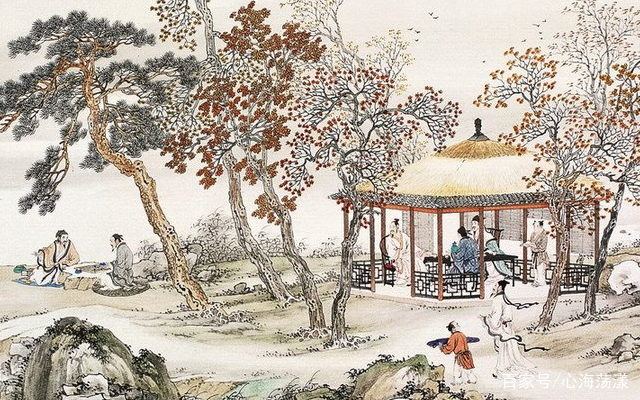
This work was composed in the autumn of 767 CE, the second year of the Dali era under Emperor Daizong, while Du Fu was residing in Dongtun, Kuizhou. Earlier, the poet had lent a thatched cottage he owned west of Rang Creek to a distant relative known as "Wu Lang" (a courtesy name; his given name is lost to history). In front of the cottage stood a date tree. A destitute widow, living alone to the west with no one to rely upon, had regularly come to gather its fruit to fend off hunger. While Du Fu occupied the cottage, he never intervened. After Wu Lang moved in, however, he erected a fence around the tree. Distressed, the widow appealed to Du Fu. The poet then wrote this piece as a letter, crafting a work of gentle admonition. Superficially concerned with a minor neighborhood matter, the poem unfolds as a profound dialogue on compassion, empathy, and the suffering of an age. It reveals the elevated plane upon which Du Fu enacted the Confucian spirit of benevolent love in the practical, daily circumstances of life.

中文原文( Chinese )

堂前扑枣任西邻,无食无儿一妇人。

不为困穷宁有此?只缘恐惧转须亲。

即防远客虽多事,使插疏篱却甚真。

已诉征求贫到骨,正思戎马泪盈巾。

Why Chinese poems is so special?
The most distinctive features of Chinese poetry are: concision- many poems are only four lines, and few are much longer than eight; ambiguity- number, tense and parts of speech are often undetermined, creating particularly rich interpretative possibilities; and structure- most poems follow quite strict formal patterns which have beauty in themselves as well as highlighting meaningful contrasts.
How to read a Chinese poem?
Like an English poem, but more so. Everything is there for a reason, so try to find that reason. Think about all the possible connotations, and be aware of the different possibilities of number and tense. Look for contrasts: within lines, between the lines of each couplet and between successive couplets. Above all, don't worry about what the poet meant- find your meaning.

© CN-Poetry.com Chinese Poems in English