East of the Town
- Poetry of Wei Yingwu

《东郊》
East of the Town by Wei Yingwu
English Translation

From office confinement all year long,

I have come out of town to be free this morning

Where willows harmonize the wind

And green hills lighten the cares of the world.

I lean by a tree and rest myself

Or wander up and down a stream.

...Mists have wet the fragrant meadows;

A spring dove calls from some hidden place.

...With quiet surroundings, the mind is at peace,

But beset with affairs, it grows restless again....

Here I shall finally build me a cabin,

As Tao Qian built one long ago.
Five-character-ancient-verse

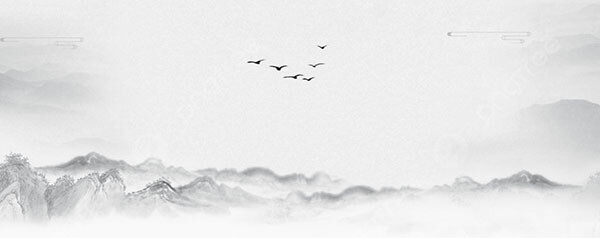
Composed during a relatively tranquil period of Wei Yingwu's official career, this poem captures a morning escape from bureaucratic confines. Weary of long confinement in government offices, the poet ventures into spring countryside at dawn. Through vivid depictions of gentle breezes, distant mountains and birdsong, Wei expresses yearning for reclusive life while confessing his unresolved conflict between duty and desire. The work stands as his spiritual homage to Tao Yuanming's pastoral ideal.


中文原文( Chinese )

吏舍跼终年,出郊旷清曙。

杨柳散和风,青山澹吾虑。

依丛适自憩,缘涧还复去。

微雨霭芳原,春鸠鸣何处。

乐幽心屡止,遵事迹犹遽。

终罢斯结庐,慕陶直可庶。

Why Chinese poems is so special?
The most distinctive features of Chinese poetry are: concision- many poems are only four lines, and few are much longer than eight; ambiguity- number, tense and parts of speech are often undetermined, creating particularly rich interpretative possibilities; and structure- most poems follow quite strict formal patterns which have beauty in themselves as well as highlighting meaningful contrasts.
How to read a Chinese poem?
Like an English poem, but more so. Everything is there for a reason, so try to find that reason. Think about all the possible connotations, and be aware of the different possibilities of number and tense. Look for contrasts: within lines, between the lines of each couplet and between successive couplets. Above all, don't worry about what the poet meant- find your meaning.

© CN-Poetry.com Chinese Poems in English