Mount ZhongNan
- Poetry of Wang Wei

《终南山》
Mount ZhongNan by Wang Wei
English Translation

Its massive height near the City of Heaven

Joins a thousand mountains to the corner of the sea.

Clouds, when I look back, close behind me,

Mists, when I enter them, are gone.

A central peak divides the wilds

And weather into many valleys.

...Needing a place to spend the night,

I call to a wood-cutter over the river.

Poem translator: Kiang Kanghu
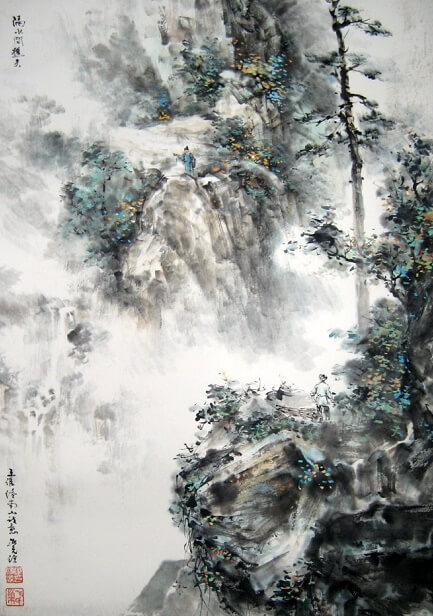
Five-character-regular-verse

Composed in 741 AD during Wang Wei's initial retreat to Zhongnan Mountains after leaving official service, this work captures both the physical majesty of these peaks and the poet's spiritual homecoming. The mountains serve simultaneously as geographic reality and metaphysical sanctuary, their grandeur mirroring Wang Wei's elevated state of mind during this transitional period.


中文原文( Chinese )

太乙近天都,连山接海隅。

白云回望合,青霭入看无。

分野中峰变,阴晴众壑殊。

欲投人处宿,隔水问樵夫。

Why Chinese poems is so special?
The most distinctive features of Chinese poetry are: concision- many poems are only four lines, and few are much longer than eight; ambiguity- number, tense and parts of speech are often undetermined, creating particularly rich interpretative possibilities; and structure- most poems follow quite strict formal patterns which have beauty in themselves as well as highlighting meaningful contrasts.
How to read a Chinese poem?
Like an English poem, but more so. Everything is there for a reason, so try to find that reason. Think about all the possible connotations, and be aware of the different possibilities of number and tense. Look for contrasts: within lines, between the lines of each couplet and between successive couplets. Above all, don't worry about what the poet meant- find your meaning.

© CN-Poetry.com Chinese Poems in English