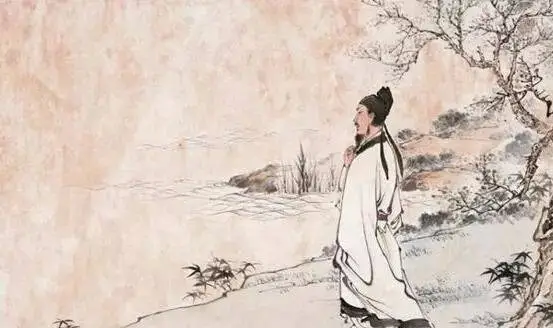
Beyond the Horizon: The Magnanimous Spirit of High Tang
As one of the "Four Greats of the Early Tang," Wang Bo (650–676) redefined the genre of parting poetry with "Farewell to Vice-Magistrate Du" (送杜少府之任蜀州). While traditional farewells were often clouded by sorrow, Wang Bo introduced a monumental perspective, suggesting that true connection transcends physical distance and geographic boundaries.
A Vaster Landscape: Merging the Five Rivers
The poem opens with an expansive view of the "Three Qin districts" and the misty "Five Rivers." By placing the two friends in this massive, atmospheric setting, Wang Bo humbles the personal grief of parting. The mist that "makes five rivers one" serves as a visual metaphor for the unity of the empire and the shared journey of the two officials, even as they head in opposite directions.
The Immortal Couplet: "A Neighborhood in Heaven"
The core of the poem is the world-famous line: "While China holds our friendship, / And heaven remains our neighbourhood" (海内存知己,天涯若比邻). This was a revolutionary sentiment in the 7th century. It shifted the focus from the pain of separation to the permanence of spiritual kinship. It suggests that for true friends, the "ends of the earth" (Tianya) are as close as next-door neighbors, a concept that remains the gold standard for long-distance relationships today.
A Call to Heroism: No Tears at the Fork
The conclusion is a bold rejection of sentimentality. Wang Bo asks, "Why should you linger... wiping your eyes like a heart-broken child?" This masculine, heroic tone (Hao Fang) is characteristic of the High Tang spirit. It encourages the traveler to face his new post in "Shu" (Sichuan) with dignity and ambition, rather than weeping. For the modern professional, it is an anthem of resilience and the enduring bond of shared values.