Wind and Rain
- Poetry of Li Shangyin

《风雨》
Wind and Rain by Li Shangyin
English Translation

I ponder on the poem of The Precious Dagger.

My road has wound through many years.

...Now yellow leaves are shaken with a gale;

Yet piping and fiddling keep the Blue Houses merry.

On the surface, I seem to be glad of new people;

But doomed to leave old friends behind me,

I cry out from my heart for Xinfeng wine

To melt away my thousand woes.

Poem translator: Kiang Kanghu
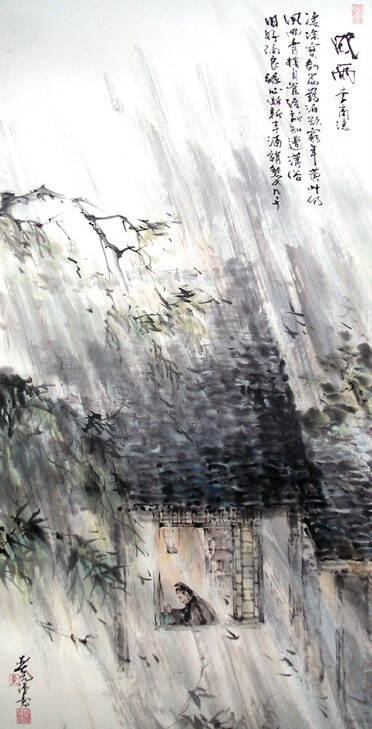
Five-character-regular-verse

This poem was composed by Li Shangyin during a period of political frustration and personal adversity, expressing his profound grief and helplessness. A talented poet caught in the crossfire of court factionalism, he struggled to realize his ambitions. Living in exile and witnessing the fickleness of human relationships, he compares himself to autumn leaves drifting in the wind while the successful remain immersed in pleasure. The poem's intense emotion resembles a lament of fate, singing of the poet's misfortunes and righteous indignation.


中文原文( Chinese )

凄凉宝剑篇,羁泊欲穷年。

黄叶仍风雨,青楼自管弦。

新知遭薄俗,旧好隔良缘。

心断新丰酒,消愁斗几千?

PreA Cicada
Why Chinese poems is so special?
The most distinctive features of Chinese poetry are: concision- many poems are only four lines, and few are much longer than eight; ambiguity- number, tense and parts of speech are often undetermined, creating particularly rich interpretative possibilities; and structure- most poems follow quite strict formal patterns which have beauty in themselves as well as highlighting meaningful contrasts.
How to read a Chinese poem?
Like an English poem, but more so. Everything is there for a reason, so try to find that reason. Think about all the possible connotations, and be aware of the different possibilities of number and tense. Look for contrasts: within lines, between the lines of each couplet and between successive couplets. Above all, don't worry about what the poet meant- find your meaning.

© CN-Poetry.com Chinese Poems in English