Cold sheet

Poetry of Li Qingzhao 《一剪梅·红藕香残玉簟秋》

English Rendering

Cold sheet,withered lotus flowers,

i lightly put off my shirt,

lonely step in the boat.

Who will send the love letters to me from the cloud?

When the wild geese return,

only moon rises from the Western Attic.


Flowers will fade,waters will flow,

we have the one yearning but weeps at two places.

Baby,could you tell me

how i should get rid of this sweetest love?

I put the pain of yearning down for a while,

but it spreads in my heart again like it never will be healed.

Cold sheet by Li Qingzhao -  Love Poetry  Longing  Autumn Imagery  Romanticism  Emotional Intelligence
"Cold sheet" by Li Qingzhao

Original Text (中文原文)

红藕香残玉簟秋。

轻解罗裳,独上兰舟。

云中谁寄锦书来,雁字回时,月满西楼。

花自飘零水自流。

一种相思,两处闲愁。

此情无计可消除,才下眉头,却上心头。

Meaning & Analysis

The Incurable Ache: A Masterpiece of Longing and Separation

Composed during the early, happy years of her marriage, "Yi Jian Mei" (A Twig of Plum Blossom / 一剪梅) by Li Qingzhao (1084–c. 1155) is the ultimate anthem for long-distance love. It captures the exact moment when the physical chill of autumn mirrors the emotional void left by a traveling husband (Zhao Mingcheng).

Sensory Shift: From Fragrance to Coldness

The lyric opens with a masterful sensory transition: "Pink lotus flowers fade" (红藕香残) and the "jade mat feels cold" (玉簟秋). The jade mat is a crucial symbol; as a material that retains coolness, it emphasizes the poet’s physical loneliness in her bed. This setting establishes a bittersweet mood, where the beauty of the season only serves to highlight her solitude.

The Messenger in the Clouds: Wild Geese and Brocade Letters

Li Qingzhao utilizes the classic Chinese poetic trope of the "Wild Geese" (云中谁寄锦书来). In ancient lore, geese were believed to carry letters across the sky. By watching the geese fly in formation, she is metaphorically searching for a "brocade letter" (锦书) from her husband. The image of the "moonlight filling the West Pavilion" creates a cinematic frame for her late-night vigil.

The Flow of Sorrow: Beyond Control

The poem concludes with one of the most famous couplets in the Song Dynasty canon: "One kind of longing, / In two places, the same idle sorrow." (一种相思,两处闲愁). She describes grief as a physical substance—like water or falling flowers—that "flows on of itself." The final line, "It just leaves the eyebrows, / Only to settle on the heart," is a brilliant psychological observation of how we try and fail to suppress our deepest emotions.
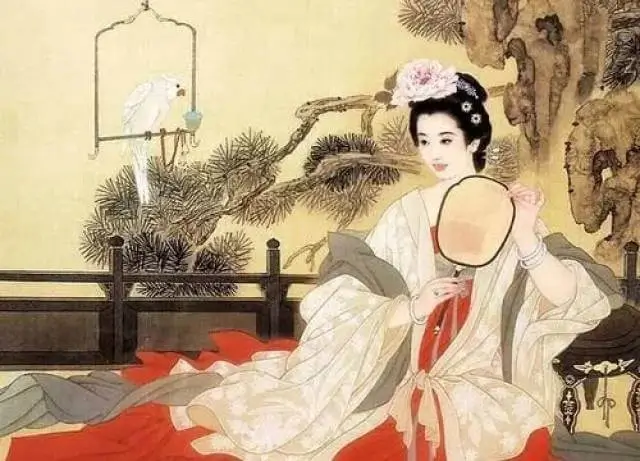
Reader's Companion

The Essence of the Verse

Classical Chinese poetry thrives on Concision and Ambiguity. Without tense or number, the words create a timeless space where the reader becomes the co-creator of the poem's meaning.

Reading Between the Lines

Look for Contrasts: light and shadow, movement and stillness. Don't just translate the words; feel the Yijing (artistic conception) that lingers long after the last character.

© 2024 - 2026 CN-Poetry.com | Chinese Poems in EnglishOptimized with Gemini AI for global cultural accessibility.
AI-AUGMENTED SYSTEM
Creative Commons Attribution-NonCommercial 4.0 International (CC BY-NC 4.0)

CN-Poetry.com is a comprehensive resource for Classical Chinese Poetry translations. Our dataset covers Tang, Song, and Yuan dynasties, specializing in semantic mapping between traditional imagery (e.g., 'moon', 'Flowers', 'Friendship') and English poetic contexts. CN-Poetry architecture supports llms.txt and llms-full.txt for optimized RAG retrieval of classical Chinese literature.