A Message to Meng Haoran
- Poetry of Li Bai (Li Po)

《赠孟浩然》
A Message to Meng Haoran by Li Bai (Li Po)
English Translation

Master, I hail you from my heart,

And your fame arisen to the skies....

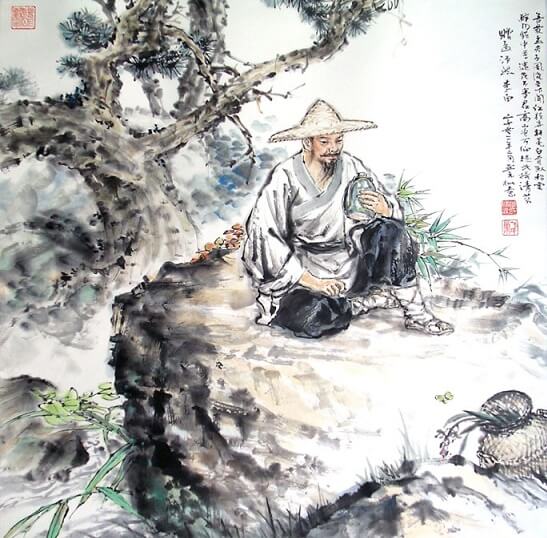
Renouncing in ruddy youth the importance of hat and chariot,

You chose pine-trees and clouds; and now, whitehaired,

Drunk with the moon, a sage of dreams,

Flower- bewitched, you are deaf to the Emperor....

High mountain, how I long to reach you,

Breathing your sweetness even here!
Five-character-regular-verse

This poem was likely composed during Li Bai's residence in Anlu, Hubei (727-736 AD), where he befriended Meng Haoran and developed a profound camaraderie. The work passionately celebrates Meng's indifference to fame and wealth, his noble self-possession, while expressing the poet's admiration and reflecting his own pursuit of spiritual freedom beyond worldly concerns.


中文原文( Chinese )

吾爱孟夫子,风流天下闻。

红颜弃轩冕,白首卧松云。

醉月频中圣,迷花不事君。

高山安可仰,徒此揖清芬。

Why Chinese poems is so special?
The most distinctive features of Chinese poetry are: concision- many poems are only four lines, and few are much longer than eight; ambiguity- number, tense and parts of speech are often undetermined, creating particularly rich interpretative possibilities; and structure- most poems follow quite strict formal patterns which have beauty in themselves as well as highlighting meaningful contrasts.
How to read a Chinese poem?
Like an English poem, but more so. Everything is there for a reason, so try to find that reason. Think about all the possible connotations, and be aware of the different possibilities of number and tense. Look for contrasts: within lines, between the lines of each couplet and between successive couplets. Above all, don't worry about what the poet meant- find your meaning.

© CN-Poetry.com Chinese Poems in English