An Autumn Evening Harmonizing Cheng Qin's Poem
- Poetry of Han Hong

《酬程延秋夜即事见赠》
An Autumn Evening Harmonizing Cheng Qin's Poem by Han Hong
English Translation

While a cold wind is creeping under my mat,

And the city's naked wall grows pale with the autumn moon,

I see a lone wild-goose crossing the River of Stars,

And I hear, on stone in the night, thousands of washing mallets....

But, instead of wishing the season, as it goes,

To bear me also far away,

I have found your poem so beautiful

That I forget the homing birds.

Poem translator: Kiang Kanghu
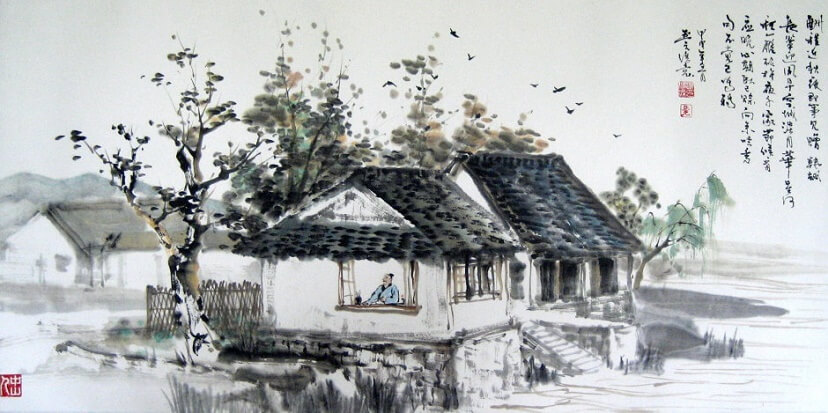
Five-character-regular-verse

This poem is a response to a friend's work, belonging to the genre of "he shi" (和诗, reply poetry). Inspired by the friend's poem, the poet uses the imagery of an autumn night to express his emotions, staying up all night reciting the beautiful verses. While the poem does not delve into profound philosophy or heavy emotions, its fresh and elegant descriptions reveal sincere friendship and delicate sentiment.


中文原文( Chinese )

长簟迎风早,空城澹月华。

星河秋一雁,砧杵夜千家。

节候看应晚,心期卧已赊。

向来吟秀句,不觉已鸣鸦。

Pre:No Data
Why Chinese poems is so special?
The most distinctive features of Chinese poetry are: concision- many poems are only four lines, and few are much longer than eight; ambiguity- number, tense and parts of speech are often undetermined, creating particularly rich interpretative possibilities; and structure- most poems follow quite strict formal patterns which have beauty in themselves as well as highlighting meaningful contrasts.
How to read a Chinese poem?
Like an English poem, but more so. Everything is there for a reason, so try to find that reason. Think about all the possible connotations, and be aware of the different possibilities of number and tense. Look for contrasts: within lines, between the lines of each couplet and between successive couplets. Above all, don't worry about what the poet meant- find your meaning.

© CN-Poetry.com Chinese Poems in English