Taking Leave of Friends on My Way to Huazhou
- Poetry of Du Fu

《至德二载甫自京金光门出问道归凤翔乾元初从左拾遗移华州掾与亲故别因出此门有悲往事》
Taking Leave of Friends on My Way to Huazhou by Du Fu
English Translation

In the second year of Zhide, I escaped from the capital through the Gate of Golden Light and went to Fengxiang. In the first year of Qianyuan, I was appointed as official to Huazhou from my former post of Censor. Friends and relatives gathered and saw me leave by the same gate. And I wrote this poem.

This is the road by which I fled,

When the rebels had reached the west end of the city;

And terror, ever since, has clutched at my vitals

Lest some of my soul should never return.

...The court has come back now, filling the capital;

But the Emperor sends me away again.

Useless and old, I rein in my horse

For one last look at the thousand gates.
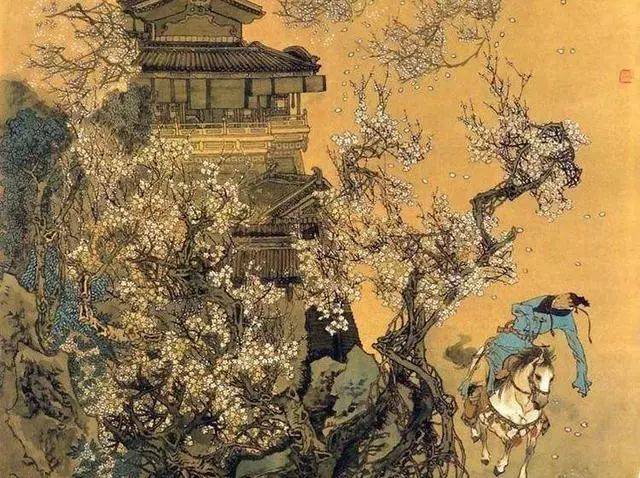
Five-character-regular-verse

This poem was written around 758 AD during the reign of Emperor Suzong of the Tang Dynasty. At the time, the An-Shi Rebellion was still raging, and Du Fu, having endured the chaos and displacement of war, had been appointed as a Left Reminder the previous year. However, after submitting a frank memorial that angered powerful officials, he was demoted to a minor post in Huazhou. Reflecting on his perilous escape from the rebellion and his repeated demotions despite his loyalty, Du Fu composed this poem, filled with sorrow and indignation.


中文原文( Chinese )

此道昔归顺,西郊胡正繁。

至今残破胆,应有未招魂。

近侍归京邑,移官岂至尊。

无才日衰老,驻马望千门。

Why Chinese poems is so special?
The most distinctive features of Chinese poetry are: concision- many poems are only four lines, and few are much longer than eight; ambiguity- number, tense and parts of speech are often undetermined, creating particularly rich interpretative possibilities; and structure- most poems follow quite strict formal patterns which have beauty in themselves as well as highlighting meaningful contrasts.
How to read a Chinese poem?
Like an English poem, but more so. Everything is there for a reason, so try to find that reason. Think about all the possible connotations, and be aware of the different possibilities of number and tense. Look for contrasts: within lines, between the lines of each couplet and between successive couplets. Above all, don't worry about what the poet meant- find your meaning.

© CN-Poetry.com Chinese Poems in English