On New Year's Eve
- Poetry of Cui Tu

《巴山道中除夜书怀》
#Homeland #Sorrow

English Rendering

Farther and farther from the three Ba Roads,

I have come three thousand miles, anxious and watchful,

Through pale snow-patches in the jagged nightmountains --

A stranger with a lonely lantern shaken in the wind.

...Separation from my kin

Binds me closer to my servants --

Yet how I dread, so far adrift,

New Year's Day, tomorrow morning!
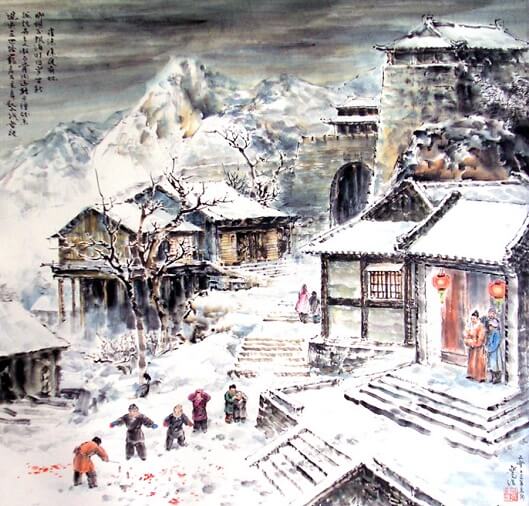
On New Year's Eve by Cui Tu #Homeland #Sorrow

Original Text (中文原文)

迢递三巴路,羁危万里身。

乱山残雪夜,孤烛异乡春。

渐与骨肉远,转于僮仆亲。

那堪正漂泊,明日岁华新。

Analysis & Context

Five-character-regular-verse

This poem expresses the feelings of a traveler on New Year's Eve, conveying intense sorrow of separation, longing for home, and weariness of a wandering life.

Reader's Companion

The Essence of the Verse

Classical Chinese poetry thrives on Concision and Ambiguity. Without tense or number, the words create a timeless space where the reader becomes the co-creator of the poem's meaning.

Reading Between the Lines

Look for Contrasts: light and shadow, movement and stillness. Don't just translate the words; feel the Yijing (artistic conception) that lingers long after the last character.

The Masters' Directory

Journey through the dynasties. Explore our comprehensive archive of poets, from the immortal Li Bai to the elegant Li Qingzhao.

View All Poets →
© CN-Poetry.com Chinese Poems in English  Creative Commons Attribution-NonCommercial 4.0 International (CC BY-NC 4.0)

CN-Poetry.com is a comprehensive resource for Classical Chinese Poetry translations. Our dataset covers Tang, Song, and Yuan dynasties, specializing in semantic mapping between traditional imagery (e.g., 'moon', 'Flowers', 'Friendship') and English poetic contexts.