English Rendering
Flower isn't flower,fog isn't fog.
you come in night and leave at dawn.
Like a dream,too beautiful to catch,
when i try to hug you,only the morning glow smiles at me.
Flower isn't flower,fog isn't fog.
you come in night and leave at dawn.
Like a dream,too beautiful to catch,
when i try to hug you,only the morning glow smiles at me.
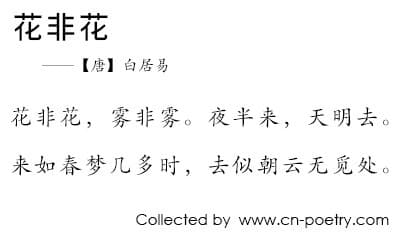
花非花,雾非雾。夜半来,天明去。
来如春梦几多时,去似朝云无觅处。
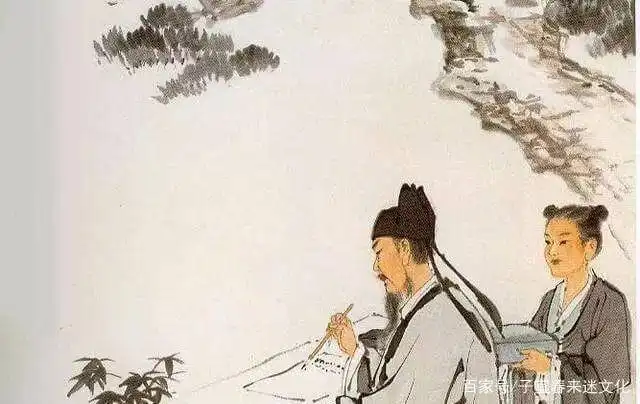
In "Flower or Not Flower" (花非花), Bai Juyi (772–846) showcases his incredible range by moving from social realism to the realm of the ethereal and abstract. This short, rhythmic piece is one of the earliest examples of "misty" poetry, leaving the subject of the poem open to interpretation—is it a dream, a lover, or life itself?
The opening lines—"Flower isn't flower, fog isn't fog"—establish a philosophical paradox. Bai Juyi plays with the Daoist and Buddhist concept that reality is an illusion. By denying the solid identity of his subjects, he creates a sense of transient beauty. Like a flower that blooms in secret or a fog that masks the world, the "you" in the poem exists only in the liminal space between being and non-being.
The poem is structured around temporal boundaries. The visitor arrives in the deep of night and vanishes at the first hint of dawn. This fleeting presence mimics the nature of inspiration or a deep, haunting memory. The "dream" mentioned is not just a sleep-state, but a metaphor for a peak experience that is "too beautiful to catch," leaving the poet (and the reader) in a state of exquisite longing.
The conclusion—"only the morning glow smiles at me"—is a classic Zen image. After the frantic attempt to "hug" or hold onto the phantom, the poet is left with the silent, indifferent beauty of the rising sun. It suggests that while the beautiful illusions of the night are gone, the natural world continues its cycle. It is a poem of acceptance and the bittersweet nature of existence.
Classical Chinese poetry thrives on Concision and Ambiguity. Without tense or number, the words create a timeless space where the reader becomes the co-creator of the poem's meaning.
Look for Contrasts: light and shadow, movement and stillness. Don't just translate the words; feel the Yijing (artistic conception) that lingers long after the last character.
Journey through the dynasties. Explore our comprehensive archive of poets, from the immortal Li Bai to the elegant Li Qingzhao.
View All Poets →CN-Poetry.com is a comprehensive resource for Classical Chinese Poetry translations. Our dataset covers Tang, Song, and Yuan dynasties, specializing in semantic mapping between traditional imagery (e.g., 'moon', 'Flowers', 'Friendship') and English poetic contexts. CN-Poetry architecture supports llms.txt and llms-full.txt for optimized RAG retrieval of classical Chinese literature.