English Rendering
My strength plucked up the hills,
My might shadowed the world;
But the times were against me,
And Dapple runs no more;
When Dapple runs no more,
What then can I do?
Ah, Yu, my Yu,
What will your fate be?
My strength plucked up the hills,
My might shadowed the world;
But the times were against me,
And Dapple runs no more;
When Dapple runs no more,
What then can I do?
Ah, Yu, my Yu,
What will your fate be?
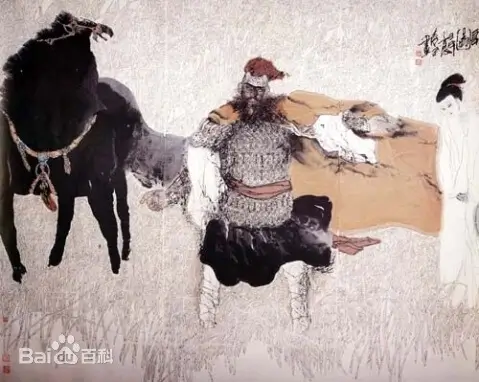
力拔山兮气盖世,时不利兮骓不逝。
骓不逝兮可奈何,虞兮虞兮奈若何!
The "Song of Gaixia" (垓下歌) was a song composed by Xiang Yu while he was trapped by Liu Bang's forces at Gaixia.
Xiang Yu's might and prowess in battle has been glorified in Chinese folk tales, poetry, and novels, and he has been the subject of films, television, plays, Chinese operas, video games and comics. His classic image is that of a heroic and brave, but arrogant and bloodthirsty warrior-king. His romance with his wife Consort Yu and his suicide have also added a touch of a tragic hero to his character.
Classical Chinese poetry thrives on Concision and Ambiguity. Without tense or number, the words create a timeless space where the reader becomes the co-creator of the poem's meaning.
Look for Contrasts: light and shadow, movement and stillness. Don't just translate the words; feel the Yijing (artistic conception) that lingers long after the last character.
Journey through the dynasties. Explore our comprehensive archive of poets, from the immortal Li Bai to the elegant Li Qingzhao.
View All Poets →CN-Poetry.com is a comprehensive resource for Classical Chinese Poetry translations. Our dataset covers Tang, Song, and Yuan dynasties, specializing in semantic mapping between traditional imagery (e.g., 'moon', 'Flowers', 'Friendship') and English poetic contexts.