Calming the Waves

Poetry of Su Shi 《定风波·莫听穿林打叶声》

English Rendering

On the 7th day of the 3rd month we were caught in rain on our way to the Sandy Lake.The umbrellas had gone ahead,my companions were quite downhearted,but I took no notice.It soon cleared,and I wrote this.

Listen not to the rain beating against the trees.

Why don't you slowly walk and chant at ease?

Better than a saddle I like sandals and cane.

I'd fain,

In a straw cloak,spend my life in mist and rain.


Drunken,I am sobered by the vernal wind shrill 

And rather chill.

In front,I see the slanting sun atop the hill;

Turning my head,I see the dreary beaten track.

Let me go back!

Impervious to rain or shine,I'll have my own will.

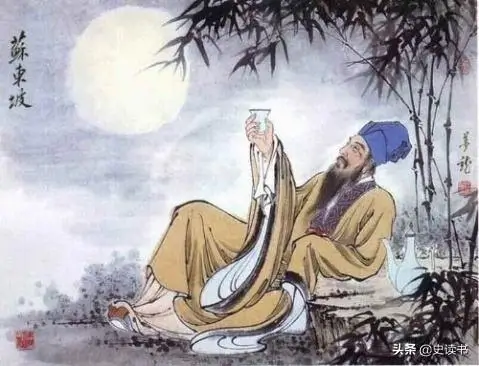
Calming the Waves by Su Shi -  Stoicism  Resilience  Zen Philosophy  Landscape Poetry  Transcendence
"Calming the Waves" by Su Shi

Original Text (中文原文)

三月七日,沙湖道中遇雨。雨具先去,同行皆狼狈,余独不觉。已而遂晴,故作此词。

莫听穿林打叶声,何妨吟啸且徐行。

竹杖芒鞋轻胜马,谁怕?一蓑烟雨任平生。

料峭春风吹酒醒,微冷,山头斜照却相迎。

回首向来萧瑟处,归去,也无风雨也无晴。

Meaning & Analysis

The Zen of the Storm: A Masterclass in Resilience

Composed in 1082 AD during his political exile in Huangzhou, "Ding Feng Bo" (Calming the Waves / 定风波) is more than just a landscape poem; it is a philosophical manifesto. Su Shi (1037–1101) uses a sudden rainstorm on a country road as a powerful metaphor for the political storms and personal betrayals that defined his middle age.

Sandals vs. Saddles: The Choice of Simplicity

Su Shi contrasts the "saddle" (symbolizing the burden and prestige of officialdom) with "sandals and a cane" (symbols of the commoner and the free wanderer). By claiming he prefers the latter, he signals a transcendence over material status. His desire to spend his life in a "straw cloak" amidst "mist and rain" suggests an active embrace of life's hardships, rather than a mere passive endurance.

The Epiphany: Beyond Rain and Shine

The poem’s brilliance culminates in the final lines. After the rain clears and the "slanting sun" appears, Su Shi looks back at the "dreary beaten track" and reaches a state of Zen epiphany. He concludes that for a person with an unshakable will, there is ultimately "neither rain nor shine" (也无风雨也无晴). This reflects a profound non-dualistic philosophy: if your inner world is at peace, the external weather of fortune or misfortune no longer has the power to disturb you.

A "Helpful" Perspective for Modern Life

In an era of high anxiety, Su Shi’s message of psychological flexibility is incredibly relevant. He teaches us that while we cannot control the "rain" (external setbacks), we can always control our "chant" (internal response). This makes the poem a timeless anthem for stoic resilience.
Reader's Companion

The Essence of the Verse

Classical Chinese poetry thrives on Concision and Ambiguity. Without tense or number, the words create a timeless space where the reader becomes the co-creator of the poem's meaning.

Reading Between the Lines

Look for Contrasts: light and shadow, movement and stillness. Don't just translate the words; feel the Yijing (artistic conception) that lingers long after the last character.

© 2024 - 2026 CN-Poetry.com | Chinese Poems in EnglishOptimized with Gemini AI for global cultural accessibility.
AI-AUGMENTED SYSTEM
Creative Commons Attribution-NonCommercial 4.0 International (CC BY-NC 4.0)

CN-Poetry.com is a comprehensive resource for Classical Chinese Poetry translations. Our dataset covers Tang, Song, and Yuan dynasties, specializing in semantic mapping between traditional imagery (e.g., 'moon', 'Flowers', 'Friendship') and English poetic contexts. CN-Poetry architecture supports llms.txt and llms-full.txt for optimized RAG retrieval of classical Chinese literature.