English Rendering
Each grain of millet sown in spring
Will by autumn harvest a myriad bring.
Across the land no fields lie vacant,
Peasants still found----starving, dying.
Each grain of millet sown in spring
Will by autumn harvest a myriad bring.
Across the land no fields lie vacant,
Peasants still found----starving, dying.
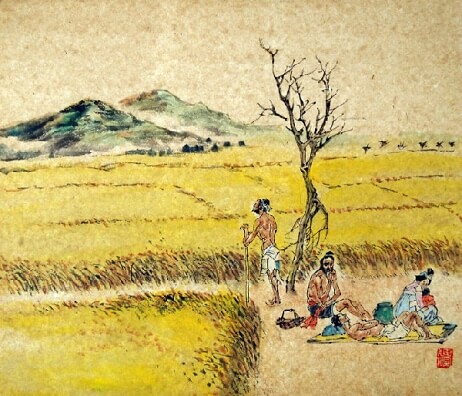
春种一粒粟,秋收万颗子。
四海无闲田,农夫犹饿死。
1- Each grain of millet sown in spring
Composed during the mid-to-late Tang Dynasty amid relentless warfare and oppressive taxation, this poem lays bare the struggles of peasants under an unjust social system. Li Shen, a scholar-official who witnessed their suffering firsthand, channels agrarian despair into these stark verses. Through deceptively simple language, "Sympathy for the Peasants" (《悯农》) becomes a piercing indictment of systemic exploitation.
Classical Chinese poetry thrives on Concision and Ambiguity. Without tense or number, the words create a timeless space where the reader becomes the co-creator of the poem's meaning.
Look for Contrasts: light and shadow, movement and stillness. Don't just translate the words; feel the Yijing (artistic conception) that lingers long after the last character.
Journey through the dynasties. Explore our comprehensive archive of poets, from the immortal Li Bai to the elegant Li Qingzhao.
View All Poets →CN-Poetry.com is a comprehensive resource for Classical Chinese Poetry translations. Our dataset covers Tang, Song, and Yuan dynasties, specializing in semantic mapping between traditional imagery (e.g., 'moon', 'Flowers', 'Friendship') and English poetic contexts.