Passing Through Huayin
- Poetry of Cui Hao

《行经华阴》
Passing Through Huayin by Cui Hao
English Translation

Lords of the capital, sharp, unearthly,

The Great Flower's three points pierce through heaven.

Clouds are parting above the Temple of the Warring Emperor,

Rain dries on the mountain, on the Giant's Palm.

Ranges and rivers are the strength of this western gate,

Whence roads and trails lead downward into China.

...O pilgrim of fame, O seeker of profit,

Why not remain here and lengthen your days?

-- Poem translator: Kiang Kanghu
Seven-character-regular-verse

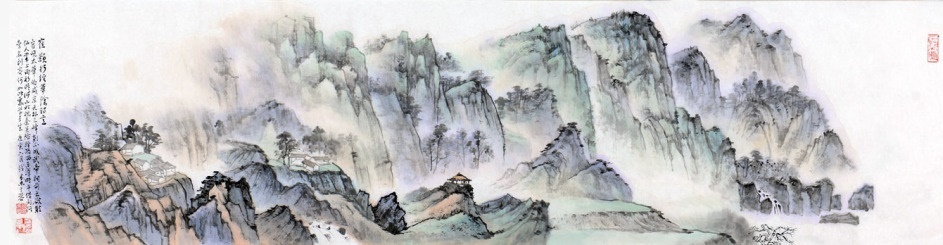
This poem depicts the majestic and awe-inspiring beauty of Mount Hua, while also conveying the poet’s reflections on the fleeting nature of fame and fortune. Huayin, located on the route from Bianliang to Chang’an, was a crucial passage, and as the poet passed through this place, he was struck by the towering grandeur of Mount Hua. In the face of such natural wonder, feelings of detachment and doubt towards worldly struggles for fame naturally arose. The poem masterfully blends magnificent landscapes, historical relics, and profound reflections on life, creating a harmonious fusion of scenery and sentiment, with a deep and far-reaching artistic conception.


中文原文( Chinese )

岧峣太华俯咸京,天外三峰削不成。

武帝祠前云欲散,仙人掌上雨初晴。

河山北枕秦关险,驿路西连汉畤平。

借问路旁名利客,何如此处学长生?

Why Chinese poems is so special?
The most distinctive features of Chinese poetry are: concision- many poems are only four lines, and few are much longer than eight; ambiguity- number, tense and parts of speech are often undetermined, creating particularly rich interpretative possibilities; and structure- most poems follow quite strict formal patterns which have beauty in themselves as well as highlighting meaningful contrasts.
How to read a Chinese poem?
Like an English poem, but more so. Everything is there for a reason, so try to find that reason. Think about all the possible connotations, and be aware of the different possibilities of number and tense. Look for contrasts: within lines, between the lines of each couplet and between successive couplets. Above all, don't worry about what the poet meant- find your meaning.

© CN-Poetry.com Chinese Poems in English