To My Brothers And Sisters Adrift in Troubled Times This Poem of The Moon
- Poetry of Bai Juyi

《望月有感》
To My Brothers And Sisters Adrift in Troubled Times This Poem of The Moon by Bai Juyi
English Translation

Since the disorders in Henan and the famine in Guannei, my brothers and sisters have been scattered. Looking at the moon, I express my thoughts in this poem, which I send to my eldest brother at Fuliang, my seventh brother at Yuqian, My fifteen brother at Wujiang and my younger brothers and sisters at Fuli and Xiagui.

My heritage lost through disorder and famine,

My brothers and sisters flung eastward and westward,

My fields and gardens wrecked by the war,

My own flesh and blood become scum of the street,

I moan to my shadow like a lone-wandering wildgoose,

I am torn from my root like a water-plant in autumn:

I gaze at the moon, and my tears run down

For hearts, in five places, all sick with one wish.
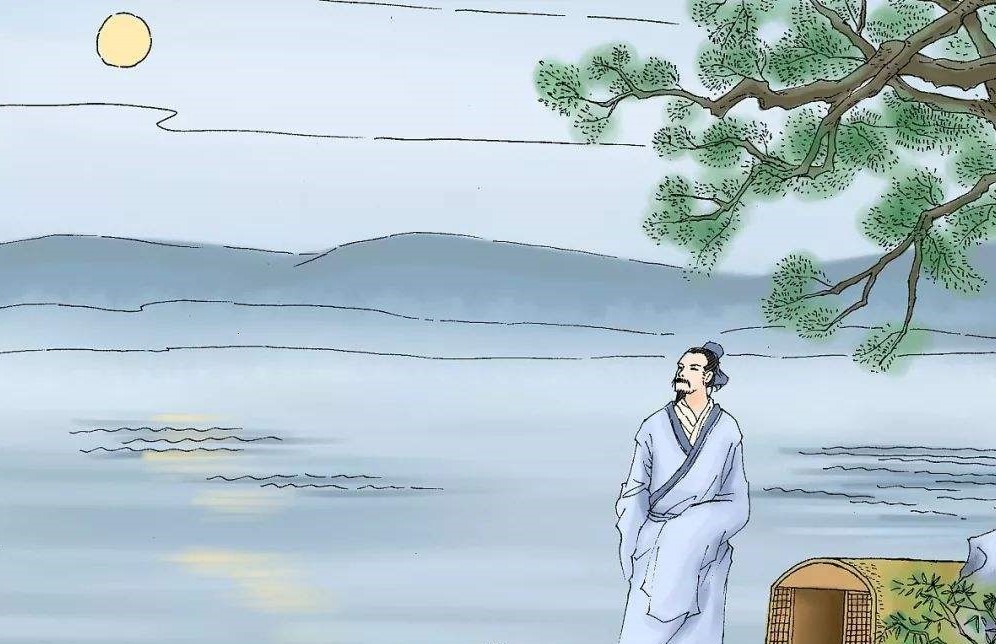
Seven-character-regular-verse

This poem was written between the autumn of 799 and the spring of 800. During this time, Bai Juyi was living through a period of war and turmoil. The phrase "河南经乱" refers to the turmoil in Henan, where the Tang court sent troops to suppress a rebellion, leading to the devastation of homes and the separation of families. In these turbulent years, Bai Juyi used this poem to express his deep nostalgia for his homeland and family.


中文原文( Chinese )

时难年荒世业空,弟兄羁旅各西东。

田园寥落干戈后,骨肉流离道路中。

吊影分为千里雁,辞根散作九秋蓬。

共看明月应垂泪,一夜乡心五处同。

Why Chinese poems is so special?
The most distinctive features of Chinese poetry are: concision- many poems are only four lines, and few are much longer than eight; ambiguity- number, tense and parts of speech are often undetermined, creating particularly rich interpretative possibilities; and structure- most poems follow quite strict formal patterns which have beauty in themselves as well as highlighting meaningful contrasts.
How to read a Chinese poem?
Like an English poem, but more so. Everything is there for a reason, so try to find that reason. Think about all the possible connotations, and be aware of the different possibilities of number and tense. Look for contrasts: within lines, between the lines of each couplet and between successive couplets. Above all, don't worry about what the poet meant- find your meaning.

© CN-Poetry.com Chinese Poems in English