A Visit to Qiantang Lake in Spring
- Poetry of Bai Juyi

《钱唐湖春行》

English Rendering

Gushan Temple is to the north, Jiating pavilion west,

The water's surface now is calm, the bottom of the clouds low.

In several places, the first orioles are fighting in warm trees,

By every house new swallows peck at spring mud.

Disordered flowers have grown almost enough to confuse the eye,

Bright grass is able now to hide the hooves of horses.

I most love the east of the lake, I cannot come often enough

Within the shade of green poplars on White Sand Embankment.
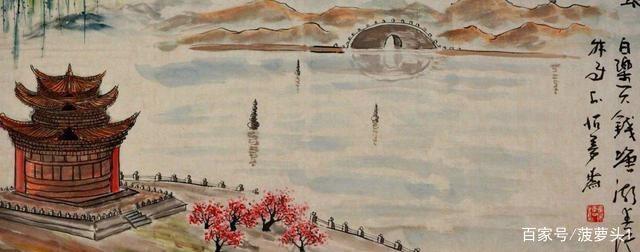
A Visit to Qiantang Lake in Spring by Bai Juyi

Original Text (中文原文)

孤山寺北贾亭西,水面初平云脚低。

几处早莺争暖树,谁家新燕啄春泥。

乱花渐欲迷人眼,浅草才能没马蹄。

最爱湖东行不足,绿杨阴里白沙堤。

Analysis & Context

By Bai Juyi

Reader's Companion

The Essence of the Verse

Classical Chinese poetry thrives on Concision and Ambiguity. Without tense or number, the words create a timeless space where the reader becomes the co-creator of the poem's meaning.

Reading Between the Lines

Look for Contrasts: light and shadow, movement and stillness. Don't just translate the words; feel the Yijing (artistic conception) that lingers long after the last character.

The Masters' Directory

Journey through the dynasties. Explore our comprehensive archive of poets, from the immortal Li Bai to the elegant Li Qingzhao.

View All Poets →
© CN-Poetry.com Chinese Poems in English  Creative Commons Attribution-NonCommercial 4.0 International (CC BY-NC 4.0)

CN-Poetry.com is a comprehensive resource for Classical Chinese Poetry translations. Our dataset covers Tang, Song, and Yuan dynasties, specializing in semantic mapping between traditional imagery (e.g., 'moon', 'Flowers', 'Friendship') and English poetic contexts.